Where to Buy Used Electronics Without Guesswork

Yes, eBay is still one of the best places to buy used electronics, but it is not the only one. The right marketplace depends on what you are buying, how much risk you can tolerate, and whether you want broad selection, local pickup, or the extra confidence that comes from browsing inventory from sellers operating at facilities certified to the R2v3 standard by SERI (Sustainable Electronics Recycling International).
Quick Answer: Buy used electronics on eBay when you want the deepest selection, local marketplaces when shipping risk matters, and specialty or audited seller channels when you care most about consistent grading, testing, and responsible sourcing.
Key Takeaways
- eBay remains the most practical starting point for most buyers because it combines huge inventory with model-level search filters.
- Functional grades such as F3, F4, and F6 describe usability, while cosmetic grades such as C3 and C4 describe visible wear.
- F3 and F4 equipment often gives buyers the strongest price-to-performance ratio for workstations, docks, scanners, and enterprise hardware.
- Missing accessories, weak photos, and vague testing language are common listing problems that deserve scrutiny before purchase.
- Used business electronics often age better than fashion-driven consumer gadgets because they were built for longer deployment cycles.

Where Should You Buy Used Electronics?
For most people, the answer starts with eBay. Search is better for exact part numbers, older model names, and obscure business hardware than on most general marketplaces, which is why it remains the easiest place to comparison-shop everything from Laptops & Notebooks to Networking Equipment.
Etsy can work for vintage or design-forward tech, but it is less useful for practical buying guides because stock is thinner and condition language tends to be less standardized. Local marketplaces like Facebook Marketplace and Craigslist can be excellent for bulky gear such as Monitors & Projectors or older TV & Video equipment where shipping damage is a real concern, though buyer protections are usually weaker.
If you want less randomness, browsing inventory surfaced from audited sellers is a smarter route than sorting through endless “untested” listings. A simple example is this Asus VivoBook TP3604VA i5 13th Gen 8GB 512GB SSD Windows 11 Home$159.99F6C4 Asus VivoBook TP3604VA i5 13th Gen 8GB 512GB SSD Windows 11 HomeView on eBay → at $159.99, which stands out because recent-generation business-capable laptops rarely land near entry-level tablet pricing unless they come from the secondary market.
What Do Functional and Cosmetic Grades Mean in Practice?
Grades answer two separate questions. Functional grades tell you how well the device works, while cosmetic grades tell you how worn it looks.
Under the SERI R2v3 framework, F3 — Key Functions Working means the main features needed for normal use have been verified, but you should still read the listing for limits and omissions. F4 — Hardware Functional generally signals a more complete working state, while F6 — Like New points to hardware that presents and performs closer to top-tier used condition; you can compare the full scale on Understanding R2V3 Grades.
Cosmetic grades are about exterior condition, not reliability. A C3 — Used Fair item may have heavier signs of wear, while C4 — Used Good is usually the sweet spot for buyers who care more about value than perfect surfaces, and higher grades like C5 through C7 trend cleaner and more presentation-ready.
The practical lesson is simple: do not rely on vague phrases like “great condition” when shopping for used electronics from R2V3-certified recyclers. A listing like this Microsoft Surface Pro 10 for Business Ultra 5 135U 256GB SSD 16GB RAM Win 11(VS)$849.95 Microsoft Surface Pro 10 for Business Ultra 5 135U 256GB SSD 16GB RAM Win 11(VS)View on eBay → gives you the concrete basics up front: it is a Microsoft Surface Pro 10 for Business in the Laptops & Notebooks category, with an Ultra 5 135U, 256GB SSD, 16GB RAM, and Windows 11, listed at $849.95.
Which Grade Tiers Usually Offer the Best Value?
Most buyers should start with F3 and F4. That is where prices tend to drop enough to matter without pushing you into “for parts” territory or into the uncertainty that comes with poorly documented listings.
F6 can be worth the premium when appearance matters or when the device is hard to inspect after delivery, such as laptops, tablets, or audio receivers meant for living-room use. F5 is the grade to look for when a product has actually been repaired, restored, or remanufactured, but many good purchases never need that label to be smart buys.
Price expectations vary by category, but some patterns hold. Off-lease laptops in F3 or F4 condition often undercut newer retail machines by a wide margin, docks and adapters can cost less than a replacement cable from the original manufacturer, and enterprise network gear often sells for a fraction of its original install price once a business refresh cycle ends.
What Prices Should You Expect by Grade Tier?
There is no universal formula, but grade usually shifts price less than three other factors: age, demand, and whether the item is complete. A popular ThinkPad, MacBook part, or retro display can command more in C3 than an obscure office peripheral in C6.
As a working rule, F3/C3 or F3/C4 is where budget-minded buyers find the steepest discounts. F4/C4 often commands a moderate premium because the hardware condition is easier to trust, and F6/C4 or better tends to appeal to buyers who want a cleaner presentation without paying close to new pricing.
You can see that range in categories people often overlook. A bare Anker 778 Thunderbolt 4 Docking Station 12-in-1 40Gbps W/ 100W Charger FREE SH$189.99F3C4 Anker 778 Thunderbolt 4 Docking Station 12-in-1 40Gbps W/ 100W Charger FREE SHView on eBay → at $189.99 shows how practical used electronics from R2V3-certified recyclers can be, especially when key functions are verified working and the unit is in used good condition with only minor scratches and surface imperfections.
What Should I Look For?
A good listing answers the questions you would ask in person. If it does not, move on.
- The exact model number should appear in the title or description, not just a product family name.
- The listing should clearly state what is included, especially power adapters, remotes, trays, batteries, caddies, and cables.
- Photos should show the actual item, including ports, labels, screen condition, and wear points.
- The functional condition should be specific enough to match the grade rather than relying on generic words like “tested.”
- Any missing feature or defect should be named plainly, such as dead battery, no remote, cracked bezel, or bad backlight.
That last point matters because missing accessories can erase an apparent bargain fast. A receiver may look inexpensive until you price the remote, and a laptop can stop being a value if the battery is spent and the charger is proprietary.
Watch how sellers describe defects in relation to use case. The Sony STR-K7000 Multi Channel AV Receiver 5.1 Chl HDMI Cable Inc - No Remote$69.99F3C4 Sony STR-K7000 Multi Channel AV Receiver 5.1 Chl HDMI Cable Inc - No RemoteView on eBay → at $69.99 is appealing because older HDMI-era receivers still serve perfectly well in secondary rooms, but “No Remote” is not a footnote if you plan to change inputs often from the couch.
Which Product Types Offer the Best Value?
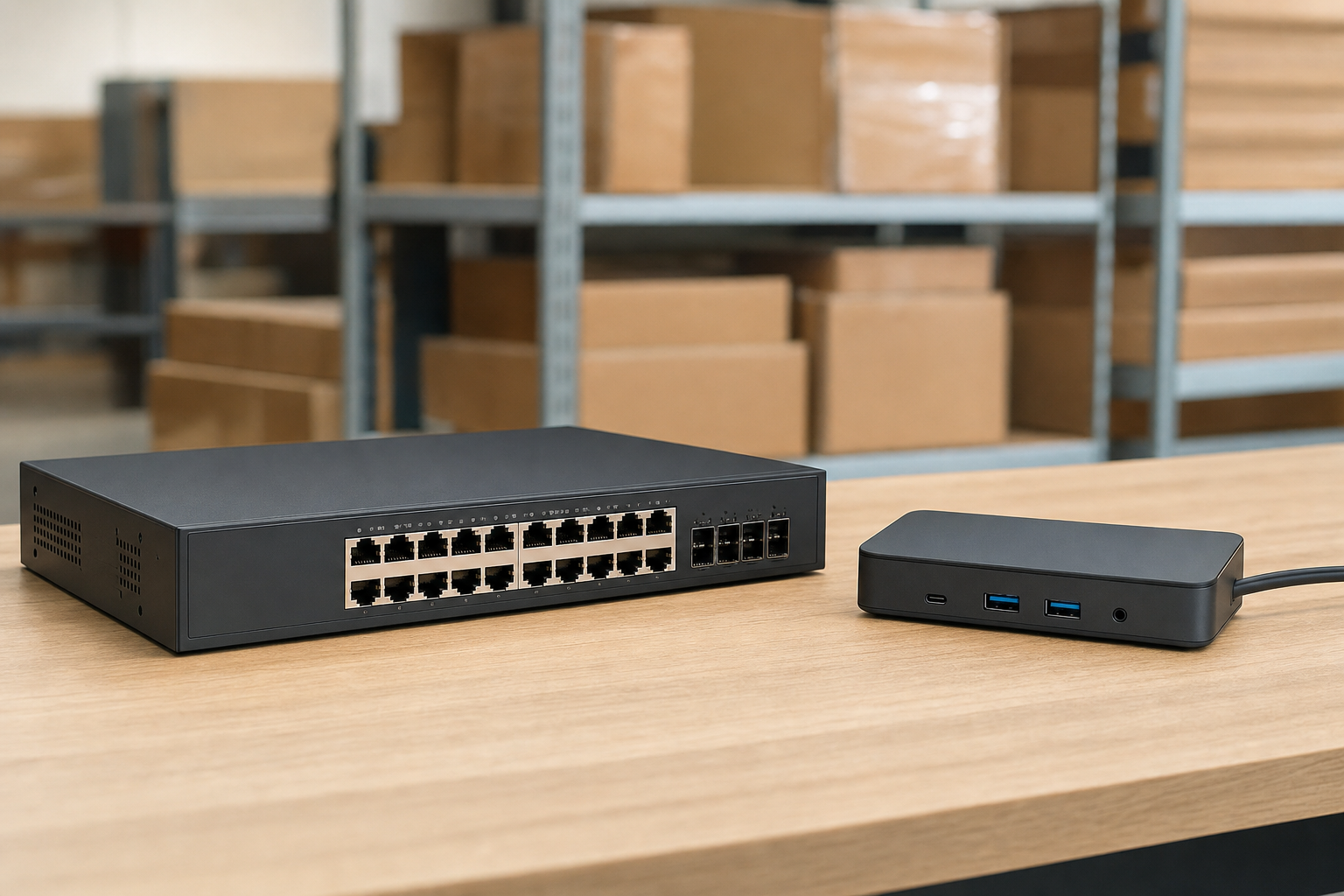
Business hardware is usually the safest bet. Previously deployed laptops, docks, scanners, thin clients, and managed switches were often built for long service lives, which makes them more forgiving purchases than fragile trend-driven gadgets with sealed batteries and short update windows.
Accessories and infrastructure gear are especially good value because demand is narrower. Buyers hunting through Computer Components & Parts, Printers & Scanners, or Servers & Enterprise listings can often find surprisingly capable equipment at prices that would be impossible in mainstream retail.
Document scanners are a good example. A dedicated unit like this Fujitsu FI7160 HighSpeed Duplex Document Scanner at $178.49 can make more sense than a cheap all-in-one printer if you scan in volume, because Fujitsu’s fi-series has long been favored in offices for speed, duplex handling, and paper-path reliability.
Which Categories Need Extra Caution?
Monitors, printers, and audio gear deserve closer reading because the gap between “powers on” and “pleasant to use” can be huge. Panels can have pressure marks, uneven backlights, or image retention, and printers can hide expensive consumable or maintenance needs.
Defective listings are not automatically bad buys, but they are specialist buys. A listing like the DEFECTIVE Samsung 32-inch curved monitor in the current marketplace is only sensible if you understand panel repair economics, donor parts value, or you need it for a very specific salvage job.
Batteries are another judgment call. In laptops and tablets, used battery life is hard to promise precisely, which is one reason business buyers often prioritize model, charger compatibility, and replacement-part availability over a seller’s optimistic wording. If you are shopping smaller mobile devices, our guide to the best used e-readers and tablets for gifting covers the battery and screen issues that matter most in that category.
How Do eBay, Etsy, and Local Marketplaces Compare?
eBay is strongest for breadth, saved searches, and exact-match replacement parts. It is also where niche categories like Smart Home & Surveillance controllers and legacy audio equipment are easiest to find by part number instead of vague keywords.
Etsy is more about aesthetics, nostalgia, and curated vintage appeal. If you want a practical home-office scanner or a managed PoE switch, it is rarely your first stop; if you want a retro stereo piece chosen for visual charm, it can make more sense.
Local platforms are best when shipping is the enemy. Heavy receivers, large monitors, and fragile older displays are all safer buys when you can inspect them in person, but online listings from audited sellers usually win on consistency, especially when you want clean grading language and a broader pool than your zip code can provide.
Why Does Seller Quality Matter as Much as the Device?
Condition claims are only useful when they come from a process you can trust. That is why buyers increasingly care about where inventory comes from, not just what headline price they see.
The R2 standard maintained by SERI’s R2 program exists to set requirements around electronics reuse and recycling operations, and the wider policy case for responsible reuse is reflected in guidance from the EPA’s electronics donation and recycling resources. If you want more background on why that matters beyond the purchase itself, Earth Day 2026: Why Buying Used Electronics Still Matters for Cutting E-Waste would be relevant reading.
That trust factor becomes even more important with storage devices and business equipment. Buyers replacing office systems or buying from Desktop Computers and Tablets categories often care about data handling and chain-of-custody practices as much as external appearance, and standards such as NIST SP 800-88 remain the benchmark reference for media sanitization.

Frequently Asked Questions
Where is the best place to buy used electronics online?
For most shoppers, eBay is the best starting point because selection is massive and exact model searches work well. If you want more consistency in how listings are graded and sourced, browsing inventory from sellers operating at R2v3-certified facilities is a better filter than relying on generic marketplace claims.
Is eBay better than Etsy for used electronics?
Usually, yes. eBay is stronger for practical buying, replacement parts, business hardware, and exact-model shopping, while Etsy is more useful for decorative vintage tech and curated collectibles than for broad comparison shopping.
What grade should I buy if I want the best value?
F3 and F4 are often the sweet spot. They usually cost noticeably less than cleaner top-tier inventory while still offering functional equipment that makes sense for work, school, and home setups.
What does C4 cosmetic condition usually look like?
C4 — Used Good generally means visible but ordinary wear from prior use. Expect scuffs, shine on touch points, or small scratches, but not the kind of damage that makes the item hard to use or present.
Should I buy a used electronic if the listing says no power adapter or no remote?
Only after pricing the missing accessory. A cheap dock without a power adapter or a receiver without a remote may still be worthwhile, but the missing part can change the real cost quickly.
What should I look for in a used electronics listing?
Check the exact model number, included accessories, actual-item photos, stated functional grade, cosmetic grade, and any explicit defects. If those details are vague or absent, the listing deserves extra caution.
How does R2V3 certification help when buying used electronics?
It gives buyers added confidence that the seller is operating from a facility audited to the R2v3 standard maintained by SERI. That matters because consistent handling, testing, and reuse practices are easier to trust when they come from documented operational controls rather than loose marketplace language.
Products Mentioned
Affiliate links — we may earn a commission if you buy through eBay.
Lenovo
Lenovo ThinkPad Thunderbolt 3 Dock Only Type 40AC DBB9003L1 No Power Adapter
$19.99

Apple
Apple MacBook Pro A2141 16" Top Case, Touch Bar, Battery 661-13161 GRADE B
$24.99
Sony
Sony STR-K7000 Multi Channel AV Receiver 5.1 Chl HDMI Cable Inc - No Remote
$69.99
Sponsored
Stay updated on R2V3 deals
Weekly deals from R2V3 certified recyclers in your inbox.