Earth Day 2026: Why Buying Used Electronics Still Matters for Cutting E-Waste
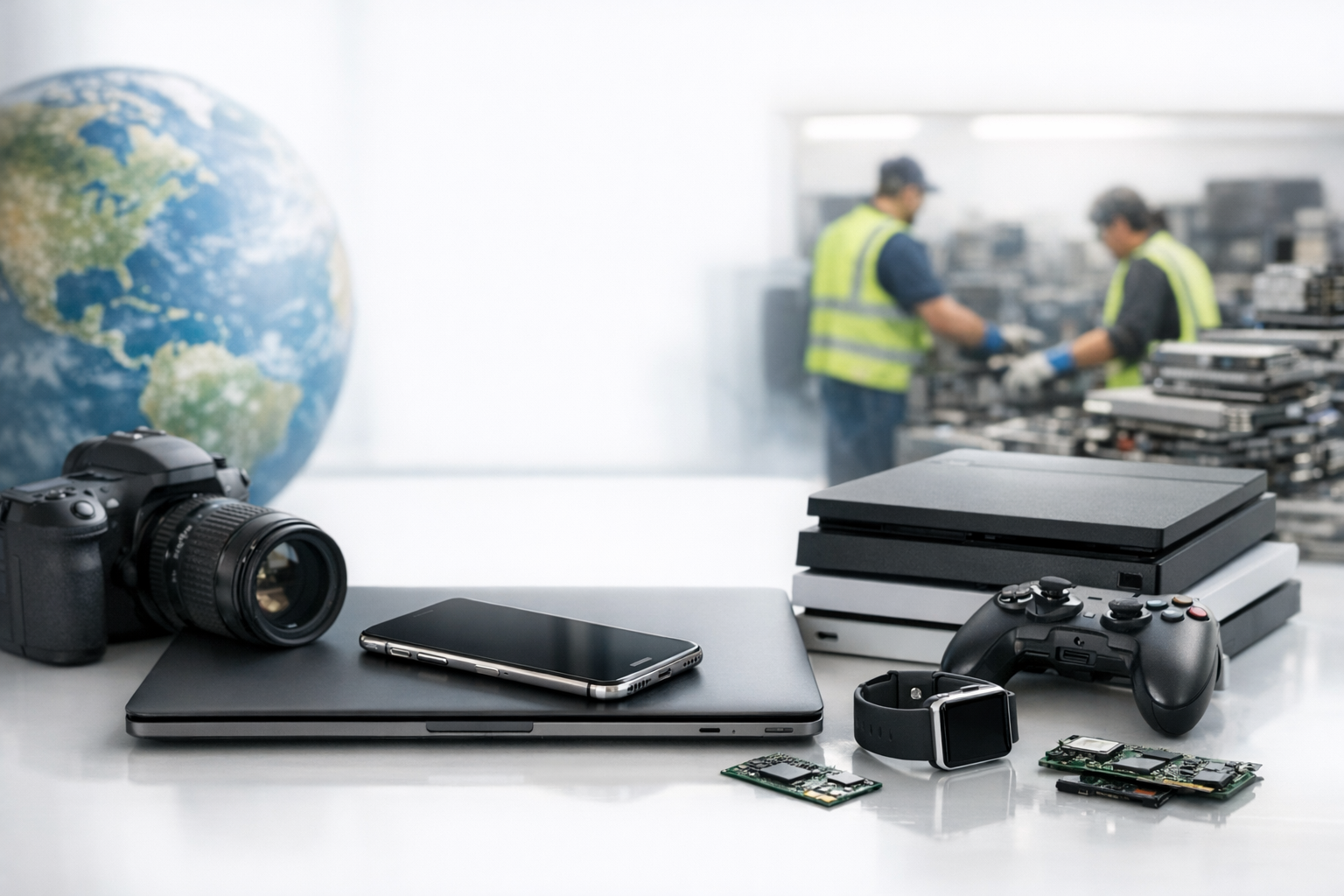
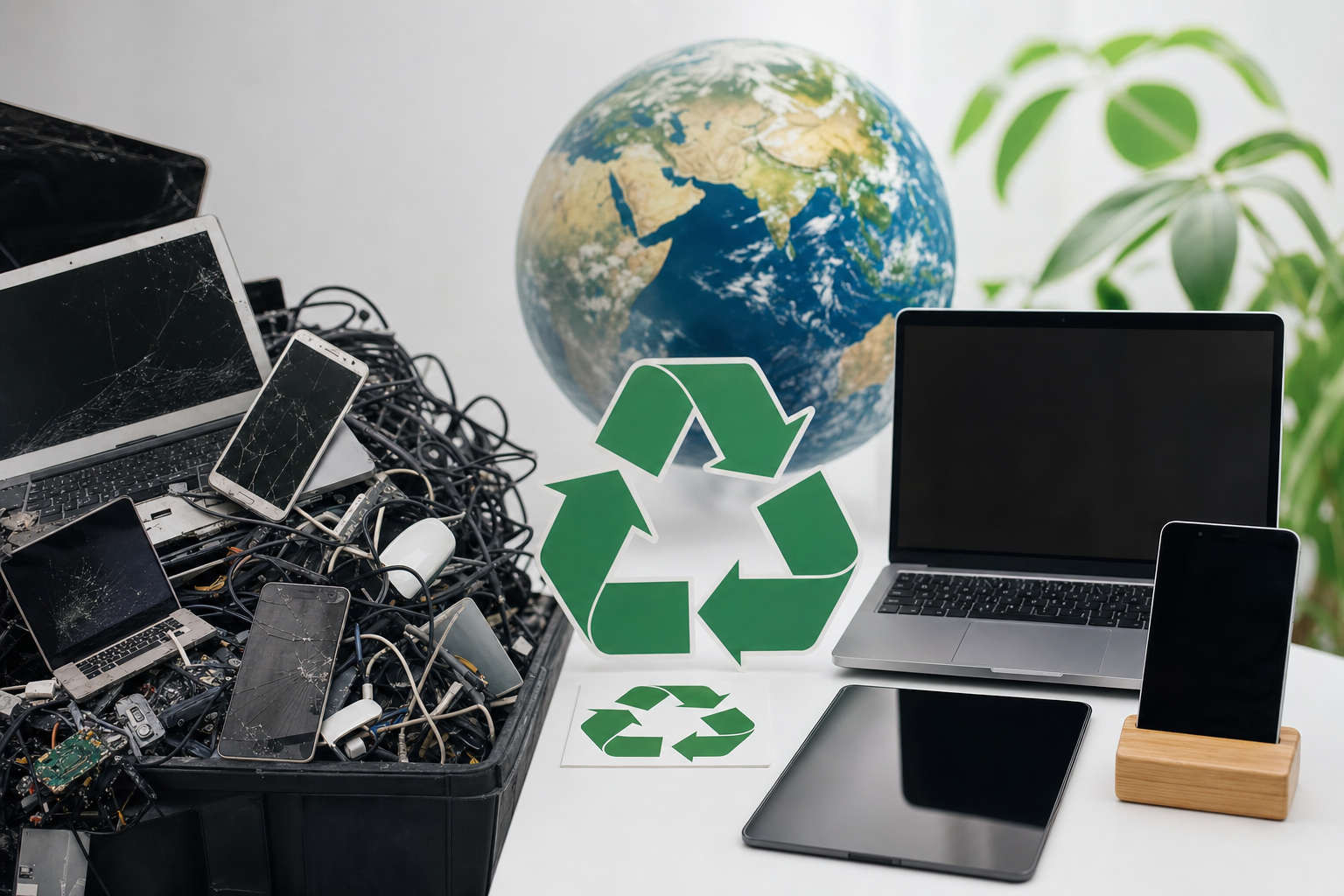
Buying used electronics cuts e-waste by keeping working hardware in service and delaying the environmental cost of manufacturing replacements. For Earth Day 2026, that still matters because the global pile of discarded devices keeps growing faster than responsible collection and reuse systems.
Quick Answer: Buying used electronics reduces e-waste when it extends the life of devices and parts that still work, lowers demand for newly made hardware, and keeps more equipment moving through accountable resale and recycling channels.
Key Takeaways
- The Global E-waste Monitor 2024 reported 62 million metric tons of e-waste generated worldwide in 2022.
- Only 22.3% of that total was documented as formally collected and recycled, which shows how much electronics material still escapes accountable systems.
- Reuse usually beats immediate recycling for working hardware because a complete device holds more value than the metals and plastics recovered after teardown.
- Grades such as F4 — Hardware Functional (functional), F6 — Like New (functional), and C4 — Used Good (cosmetic) help buyers match condition to purpose instead of guessing from vague listing language.
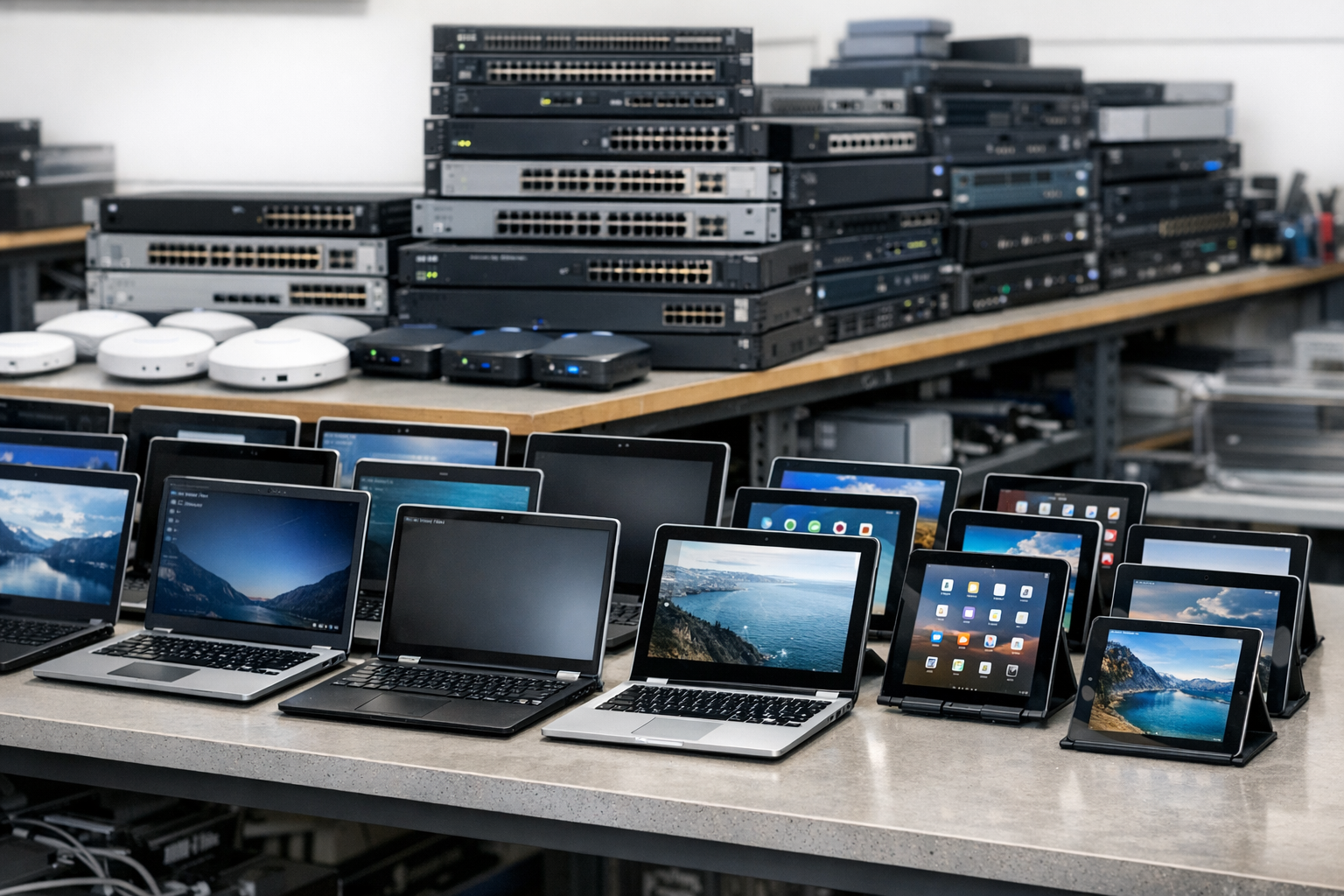
Why does buying used electronics reduce e-waste?
Most of a device's environmental footprint shows up before the first owner ever signs in. Mining, chip fabrication, battery production, assembly, packaging, and freight all happen up front, so replacing a still-capable device early creates another round of impact that did not need to happen yet.
That is why the greenest electronics purchase is often the one that avoids a new device altogether. A used laptop for office tasks, a tablet for point-of-sale duty, or a monitor for a secondary desk can deliver another few years of utility without restarting the manufacturing cycle.
This matters across categories that people do not always think of as “high impact,” including Laptops & Notebooks, Tablets, Monitors & Projectors, and Networking Equipment. A home Wi-Fi dead zone, for example, does not always need a brand-new mesh system when an Tp-link AC1750 WIFI Range Extender RE450 w/High Speed Mode & Signal Indicator $19.99F4C4 Tp-link AC1750 WIFI Range Extender RE450 w/High Speed Mode & Signal Indicator View on eBay → can solve a narrow problem with grade F4 — hardware functional and grade C4 — used good condition.
How big is the e-waste problem in 2026?
The scale is large enough that Earth Day messaging can sound abstract unless you pin it down. The Global E-waste Monitor 2024 says the world generated 62 million metric tons of e-waste in 2022, and that stream is still climbing as more products add screens, batteries, sensors, and wireless radios.
The more sobering number is the recovery gap. The same report says only 22.3% was formally collected and recycled, which means the majority was undocumented, improperly managed, stored indefinitely, or otherwise left outside systems built for safe handling.
The U.S. Environmental Protection Agency makes the same practical point in its electronics donation and recycling guidance: electronics contain valuable materials, but they can also include components that need controlled processing at end of life. The problem is not just how much gear people discard, but how much still-useful hardware gets treated like waste long before it actually reaches the end of its useful life.
What does the circular economy mean for electronics in practice?
The circular economy is the idea that products and materials should stay in use at their highest practical value for as long as possible. In electronics, that usually means reuse first, repair where sensible, parts harvesting when full-device resale no longer makes sense, and material recycling after those options are exhausted.
That order matters because a complete working device preserves far more embedded labor, components, and manufacturing energy than shredded material ever can. A tablet that still runs current apps for reading, checklists, video calls, or field data entry is more useful in one piece than as separated aluminum, glass, and circuit scraps.
Collectors and IT managers know this already, even if they do not call it circularity. Mature hardware often remains perfectly credible for narrow jobs, which is why a used tablet like Apple iPad Air 10.5" Retina Display Wi-Fi Tablet Device$150.14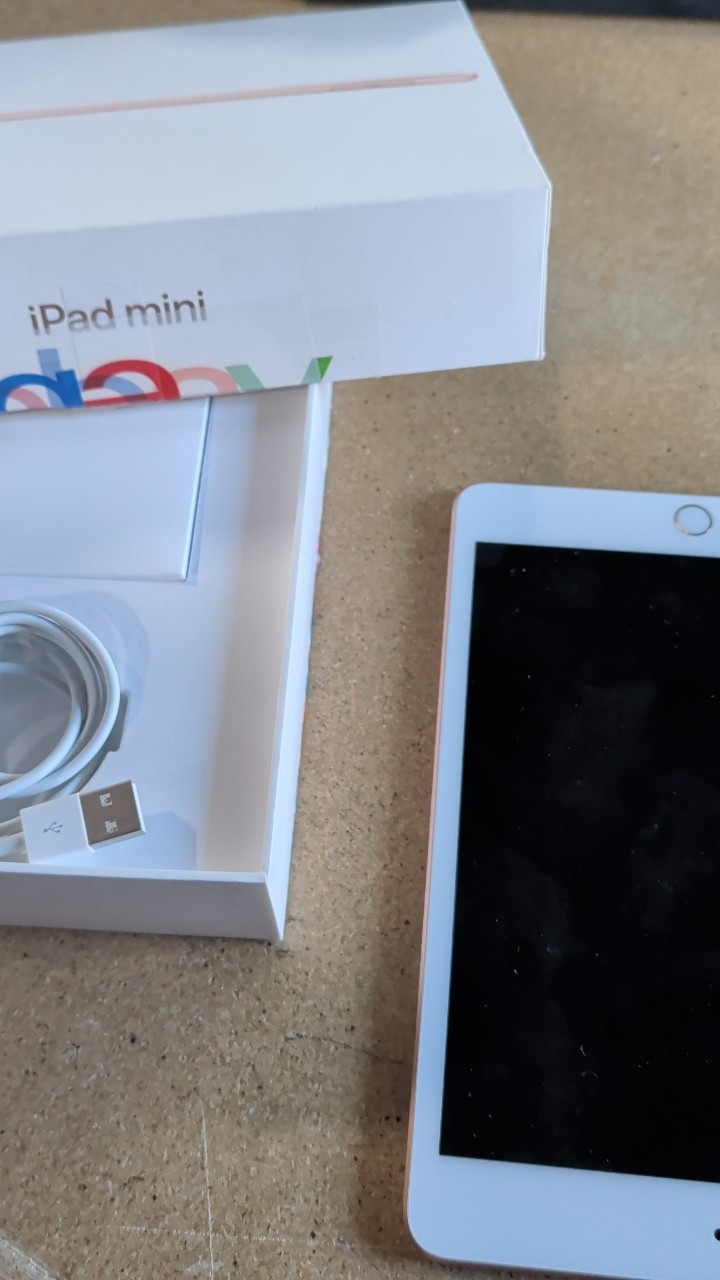 Apple iPad Air 10.5" Retina Display Wi-Fi Tablet DeviceView on eBay → can still make sense for kiosks, classrooms, check-in desks, or media duty where display quality and app support matter more than owning the newest chip.
If you are thinking beyond buying and into disposal habits too, our guide to reducing, reusing, and recycling electronics for Earth Day gets more specific about how equipment should move through its last useful stages.
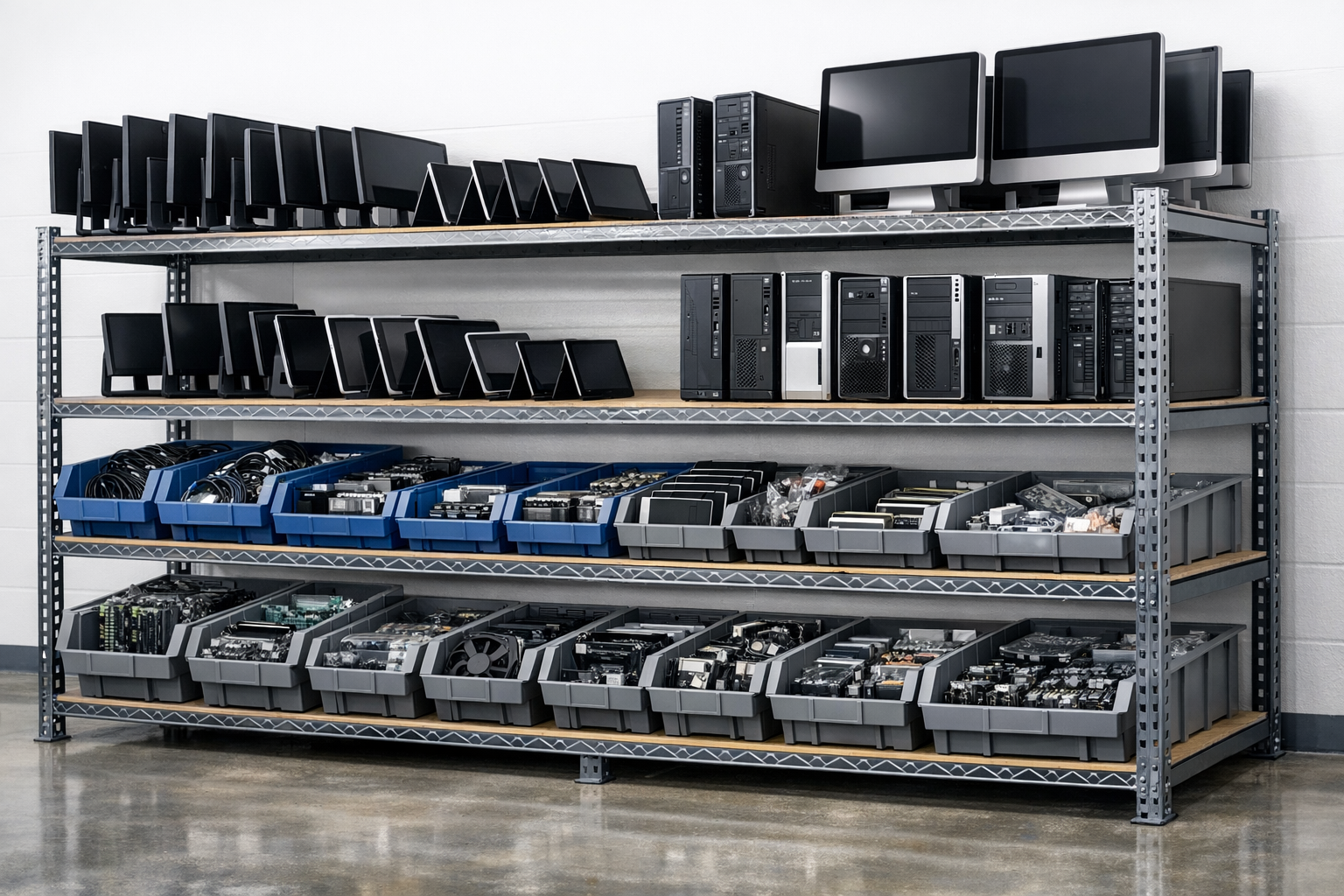
Why is reuse usually better than immediate recycling?
Recycling is necessary, but it is usually the lower-value outcome for equipment that can still perform. Once a device is dismantled for commodity recovery, the assembled product disappears and only part of its material value comes back.
Reuse keeps the original function intact. That is especially important in Desktop Computers, Servers & Enterprise, Printers & Scanners, and Computer Components & Parts, where retirement often happens because of fleet refresh policies, cosmetic wear, or one broken component rather than a total failure.
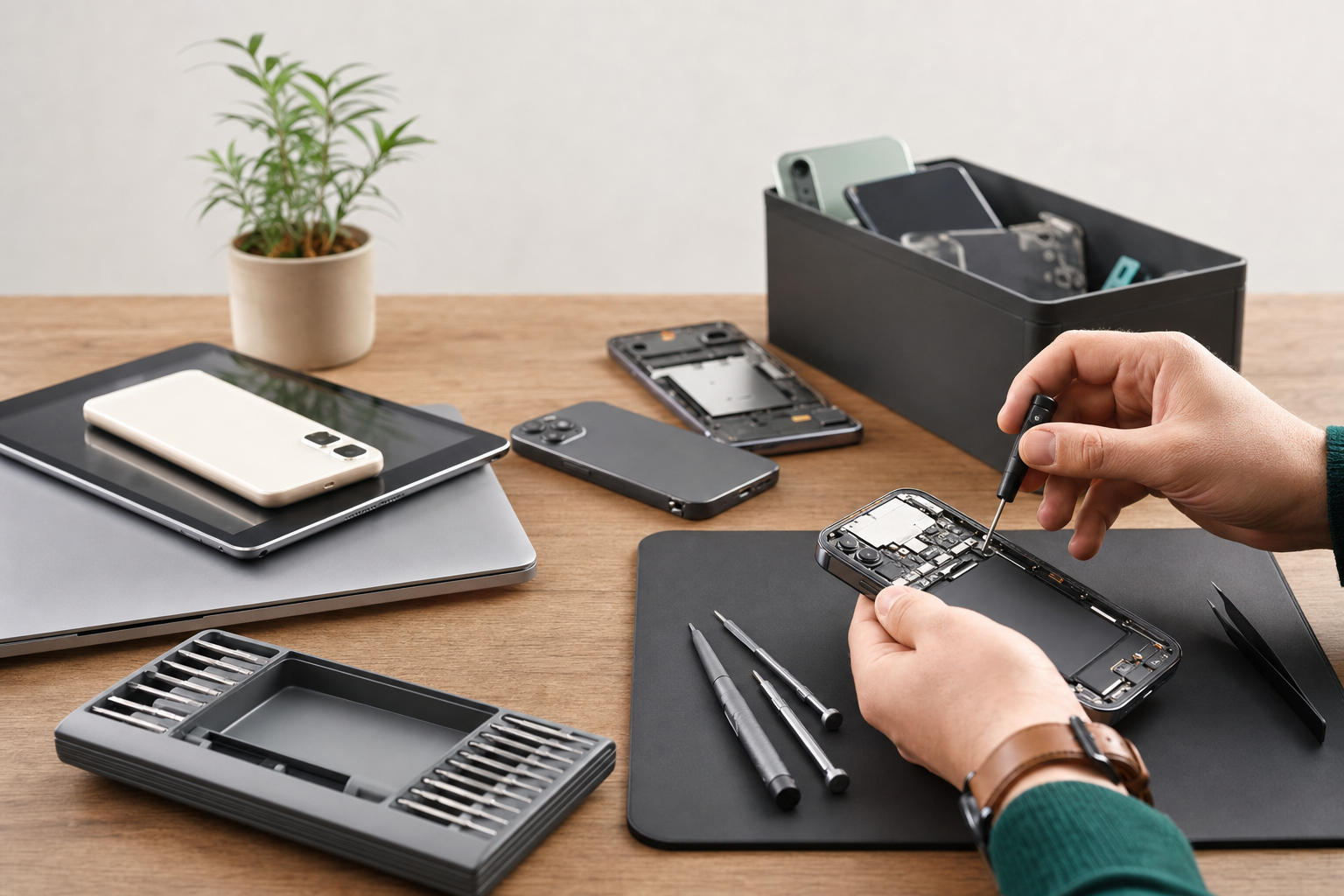
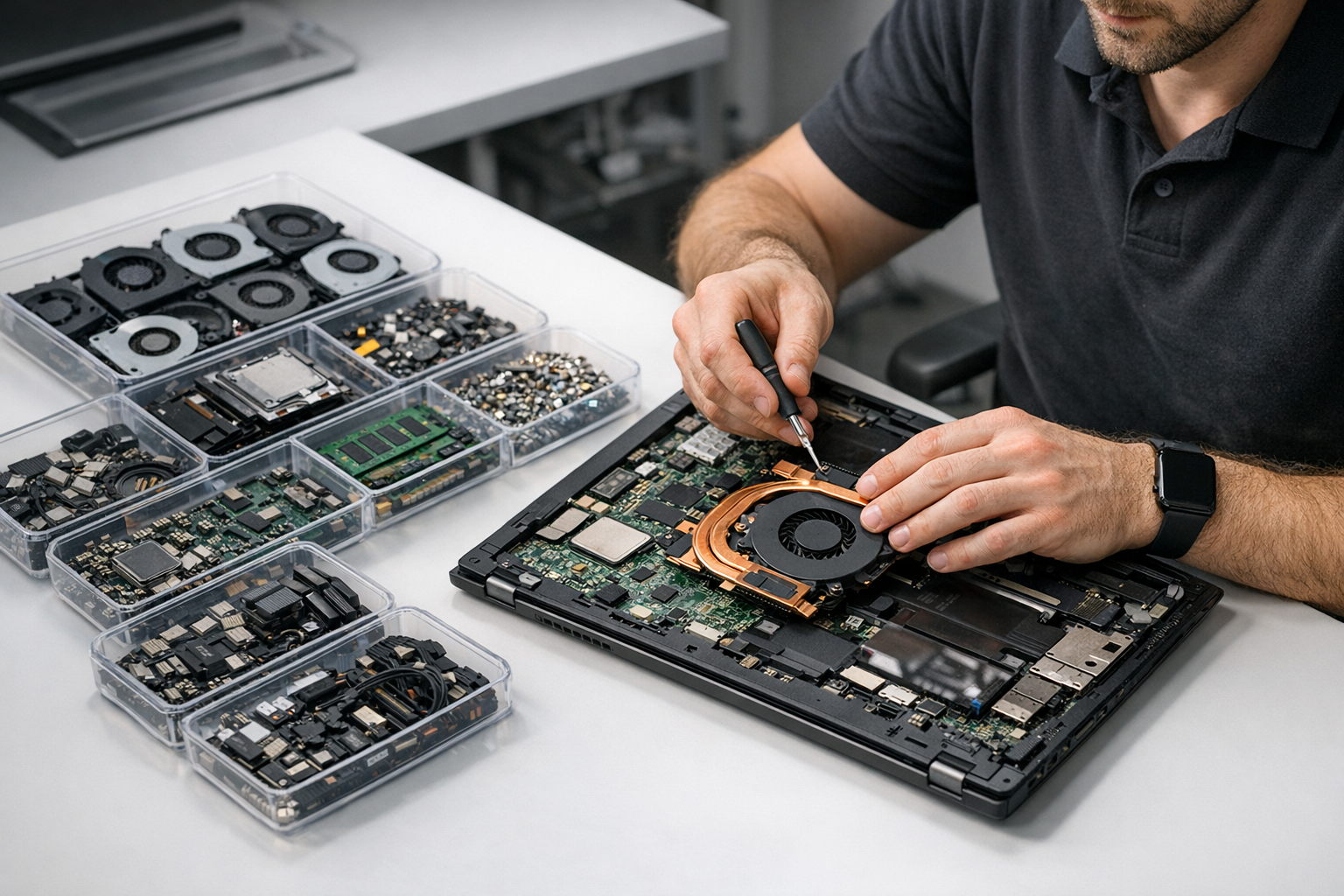
Parts reuse deserves more credit than it gets. A cracked shell, bent hinge area, or worn housing can retire an otherwise useful machine, which is why an inexpensive replacement like the Acer Nitro 17 N23Q4 Laptop Bottom Case$27.99F6C6 Acer Nitro 17 N23Q4 Laptop Bottom CaseView on eBay → is environmentally meaningful: a low-cost structural part can keep a much larger device out of the scrap stream over damage that has nothing to do with processor performance or storage capacity.
Why does buying from audited recyclers matter for Earth Day?
Buying used is not just about price or nostalgia. The stronger environmental case comes from choosing sellers operating within audited systems that can handle the whole stream responsibly, including failed boards, damaged batteries, non-resalable parts, and storage devices that require secure processing.
SERI, the Sustainable Electronics Recycling International organization behind the R2 standard, sets requirements around process controls, environmental health and safety, and downstream accountability through its electronics recycling framework. That matters because not every item entering a resale pipeline will make it back to market, and the gear that does not needs a documented path that is better than landfill disposal or informal dumping.
Data destruction is part of that same trust chain. For laptops, desktops, storage media, and enterprise gear, buyers want operations aligned with NIST SP 800-88, the National Institute of Standards and Technology guidance for media sanitization, because “used” should not mean “mystery drive with a past life still on it.”
That is one practical difference between buying from an audited recycler and grabbing unknown surplus from a parking-lot liquidation or curbside pile. The Basel Action Network has spent years documenting why downstream oversight matters when electronics leave formal channels and enter murkier export or disposal streams.
How do grades help buyers make more sustainable choices?
Grades solve one of the oldest problems in used tech buying: the gap between a seller's adjective and the device that arrives on your desk. Under the SERI R2V3 framework, functional grades run from F1 to F6 and cosmetic grades run from C1 to C9, which lets buyers evaluate performance and appearance separately.
A functional grade answers whether the device does the job it is supposed to do. A cosmetic grade answers how worn it looks while doing it. That distinction is useful because a wiring-closet device, test-bench keyboard, warehouse tablet, or backup display rarely needs the same cosmetic standard as a daily-carry notebook.
For many practical purchases, F4 — Hardware Functional paired with C4 — Used Good is the sweet spot. Buyers who care more about presentation may lean toward F6 — Like New and C6 — Used Excellent, but the larger sustainability win is buying the condition you actually need instead of overpaying for pristine appearance that adds nothing to the job.
Which electronics categories make the biggest Earth Day impact?
Laptops sit near the top because they combine batteries, displays, processors, storage, memory, and dense assembly in one compact object. Extending the life of a notebook avoids replacing several manufacturing-heavy subsystems at once, which is why the used market for business laptops remains one of the most environmentally sensible corners of tech buying.
Networking gear is another underrated category. Access points, range extenders, switches, and adapters are often replaced because standards moved on or coverage expectations changed, not because the hardware stopped being useful for smaller homes, side projects, labs, or backup roles.
Tablets, monitors, storage devices, and peripherals also deserve more attention on Earth Day. Reports suggest buyers still underestimate how much waste reduction can come from keeping one screen, one tablet, or one repair part in service for another cycle instead of treating every minor limitation as a reason to buy new.
How can buyers make a greener used-tech purchase?
Start with the job, not the deal. The most sustainable purchase is the device that will remain useful long enough to avoid a second shopping cycle six months from now.
That means matching hardware to workload. A front-desk check-in station, a kid's reading tablet, a spare-room monitor, and a home lab motherboard all have different requirements, and buying too little or too much for the task tends to create avoidable waste.
It also means thinking about service life after the sale. A system with accessible parts, common chargers, replaceable storage, or easy-to-find accessories often ages better than one minor accident away from the bin.
What should Earth Day remind us about electronics buying?
Earth Day tends to spotlight recycling because it is visible and easy to understand. Electronics need a broader lens, because the best outcome for a working device is usually continued use, not immediate teardown.
Buying used will not solve the entire e-waste problem on its own. It does something more practical: it gives functional hardware, viable parts, and narrowly useful devices another chance to do real work before they become waste.
That is a meaningful shift in a market where people routinely replace hardware for convenience, aesthetics, or policy cycles rather than actual failure. If Earth Day is about reducing pressure on resources, extending the life of electronics already in circulation remains one of the few actions that is both ordinary and effective.
Frequently Asked Questions
Does buying used electronics really reduce e-waste?
Yes, when it replaces a new purchase and keeps working hardware in service longer. The benefit comes from avoiding another round of manufacturing while reducing the number of usable devices headed toward disposal.
Why is reuse usually better than recycling for working electronics?
Reuse preserves the whole product and all of the value built into it. Recycling still matters, but it usually recovers only part of the materials after the device has already stopped being useful as a device.
What do F and C grades mean on used electronics listings?
F grades describe functional condition, while C grades describe cosmetic condition. Under the SERI R2V3 format, that helps buyers decide whether they need higher appearance standards, stronger functional assurance, or simply the lowest-cost hardware that still does the job.
Why does data sanitization matter when buying used computers or drives?
Many used devices previously held personal, business, school, or institutional data. Buyers want resale operations that follow disciplined sanitization practices aligned with guidance such as NIST SP 800-88 so storage media are handled securely before resale or recycling.
Are replacement parts part of cutting e-waste?
Absolutely. A replacement shell, screen, keyboard, power component, or storage part can keep a larger device useful for years, which is often a better environmental outcome than replacing the whole machine.
Which used electronics categories are strongest for Earth Day shopping?
Laptops, tablets, networking gear, monitors, storage devices, and repair parts are all strong candidates. They often deliver meaningful extra service life without requiring buyers to accept major compromises.
Is the cheapest used device always the greenest choice?
No. The greener choice is usually the one that matches the workload well enough to stay useful, remain repairable, and avoid another quick replacement.
Products Mentioned
Affiliate links — we may earn a commission if you buy through eBay.Sponsored
Stay updated on R2V3 deals
Weekly deals from R2V3 certified recyclers in your inbox.