World Environment Day: Repairable Tech Lasts Longer and Creates Less E-Waste

Extending device life matters because the cleanest electronics purchase is often the one you avoid, delay, or replace with a repairable used unit instead of a newly manufactured one. World Environment Day is a good moment to say the quiet part plainly: short product cycles and hard-to-repair designs are helping create an e-waste problem that did not have to be this large.
Quick Answer: Repairable, longer-lasting electronics reduce e-waste by keeping products in service, lowering demand for new manufacturing, and giving working devices a second or third life through responsible reuse and recycling.
Key Takeaways
- Design choices such as glued batteries, paired parts, and limited software support shorten practical device life even when hardware still works.
- The SERI (Sustainable Electronics Recycling International) R2 standard supports responsible handling of used electronics through requirements around testing, environmental practices, and downstream accountability.
- Secure media sanitization matters for reuse, especially for storage-bearing business gear, and recognized guidance includes NIST SP 800-88.
- Buying second-hand equipment from sellers at audited recycling facilities is usually a better environmental outcome than sending workable tech to landfill or replacing it on a reflex upgrade cycle.
- Functional and cosmetic grades should be read separately, which is why an older-looking C3 unit can still be a smart buy if its functional grade fits the job.

Why does repairability matter for World Environment Day?
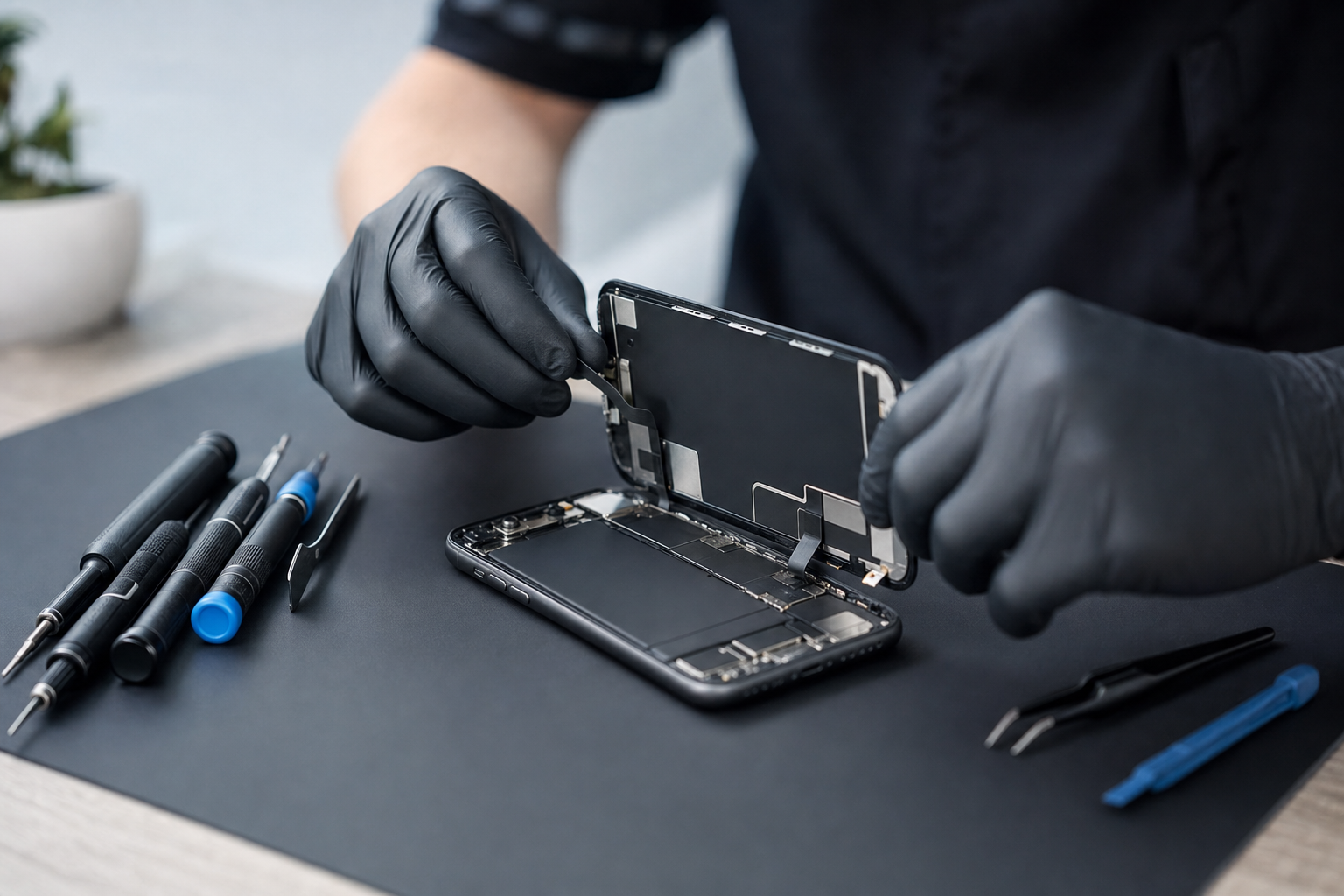
Repairability turns sustainability from a slogan into a design standard. If a battery, screen, port, fan, or power board can be replaced without destroying the product, a device can stay useful years longer than a sealed equivalent.
That matters because the global e-waste stream is already massive. The EPA’s electronics recycling guidance continues to emphasize donation, reuse, and proper recycling because discarded electronics contain both recoverable value and environmental risk.
Manufacturers also shape this outcome long before a buyer thinks about disposal. A laptop built with standard fasteners, replaceable storage, accessible memory, and available parts does not just help repair shops; it slows the pace at which perfectly salvageable gear gets treated like trash.
How do manufacturers contribute to the e-waste problem?
Annual launches are not the issue by themselves. The problem starts when new models arrive alongside shrinking repair options, limited parts availability, software support that ends too soon, and pricing that makes replacement look easier than maintenance.
Phones are the most obvious example, but the pattern runs across laptops, tablets, TVs, networking gear, and accessories. When a charging port failure or cracked panel turns into a full-device write-off, the market is being pushed toward disposal rather than stewardship.
That is why right-to-repair debates matter beyond consumer convenience. If owners and independent shops can access documentation, parts, tools, and firmware support, devices have a much better chance of moving into second-hand channels instead of becoming premature scrap; we explored that pressure in our look at reducing, reusing, and recycling electronics with R2V3-certified sellers.
What does the circular economy mean in practice for electronics?
For electronics, a circular economy means keeping products at their highest practical value for as long as possible. Reuse comes first, repair comes next when needed, parts harvesting follows when a whole unit no longer makes sense, and material recycling is the last step rather than the first instinct.
This is where categories like Laptops & Notebooks, Networking Equipment, and Printers & Scanners stand out. Enterprise and office hardware is often retired because a fleet standard changed, not because the equipment stopped being useful.
Accessories are especially good at exposing how wasteful churn can be. A dock does not need a fashion cycle, and a Lenovo ThinkPad Thunderbolt 3 Dock Only Type 40AC DBB9003L1 No Power Adapter$19.99 Lenovo ThinkPad Thunderbolt 3 Dock Only Type 40AC DBB9003L1 No Power AdapterView on eBay → shows how a low-cost second-life accessory can keep an older workstation setup productive without demanding another newly made peripheral.
How does R2V3 support responsible recycling and reuse?
The strongest reuse system is not informal and it is not guesswork. The R2 standard from SERI’s official R2 Standard overview gives recycling facilities a framework for environmental management, worker safety, testing, downstream due diligence, and handling of data-bearing equipment.
That structure matters because responsible recycling is not just about what gets shredded. It is also about what gets identified as reusable, what gets tested and graded, what gets harvested for parts, and what truly belongs in material recovery.
Data protection sits in the middle of that decision tree. For storage devices and other data-bearing hardware, recognized methods such as NIST SP 800-88 media sanitization guidance help organizations retire equipment without treating secure disposition and reuse as competing goals.
Why is buying used electronics better than landfill disposal?
Landfill disposal erases the remaining value of a product and triggers demand for another one. That is the double loss at the center of e-waste: a usable device exits circulation, and a replacement has to be mined, manufactured, packaged, shipped, and eventually discarded as well.
Reports from groups such as the Basel Action Network have long underscored how poorly managed e-waste can shift pollution and processing harm to communities far from the original point of use. Responsible recycling is partly about compliance, but it is also about refusing to export the consequences of throwaway design.
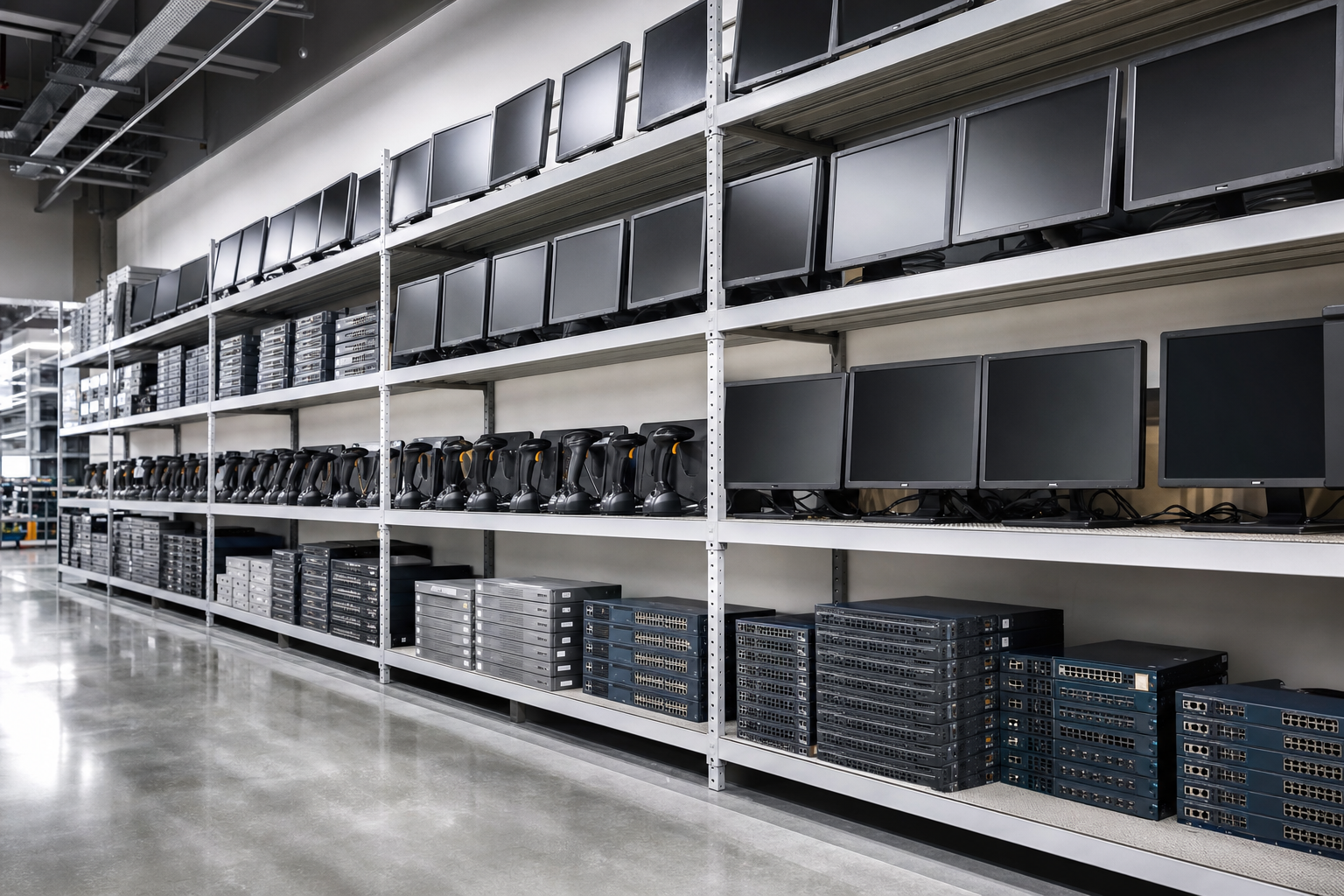
Buying from sellers operating at audited recycling facilities supports a more disciplined system. It rewards testing, grading, and reuse decisions that separate genuinely obsolete equipment from gear that still has years of service left.
Which used electronics are best suited to a second life?
The sweet spot is usually equipment with stable workloads and long original duty cycles. Business laptops, docks, monitors, scanners, switches, AV gear, and selected Servers & Enterprise hardware often age better than trend-driven consumer gadgets.
Functional and cosmetic grades help buyers choose realistically. A device listed as F3 — Key Functions Working (functional) has key functions verified, while F4 — Hardware Functional (functional) indicates hardware functionality with different tradeoffs depending on the category; appearance is scored separately through grades such as C3 — Used Fair (cosmetic), C4 — Used Good (cosmetic), and C6 — Used Excellent (cosmetic). For buyers comparing options across the site, Understanding R2V3 Grades makes those tradeoffs clearer.
Office imaging hardware is a good example because procurement timelines often retire it early. A previously deployed Fujitsu FI7160 HighSpeed Duplex Document Scanner G3D$178.49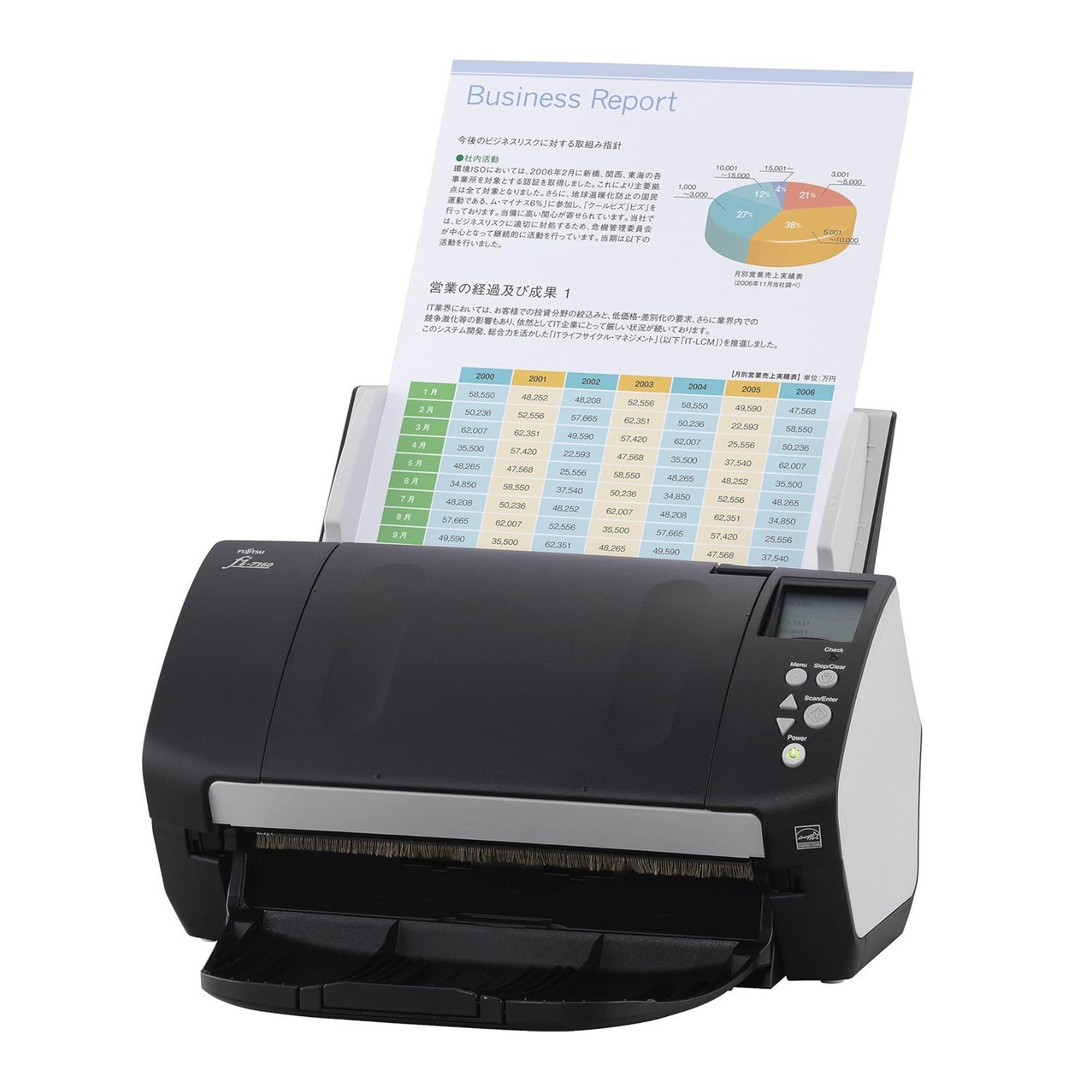 Fujitsu FI7160 HighSpeed Duplex Document Scanner G3DView on eBay → can still make sense for records work, legal intake, healthcare paperwork, or any small business that needs reliable duplex scanning without paying for a brand-new fleet model.
What should buyers look for if they care about repairability?
Start by asking whether the device category is inherently serviceable. External docks, switches, scanners, desktop towers, and many professional peripherals are often easier to keep running than ultra-thin sealed products with glued assemblies and proprietary fasteners.
Then look beyond surface wear. An item with modest cosmetic marks can be the more sustainable choice if its functional condition is stronger, its connectors are standard, and common failure points are easier to address with parts already in circulation through Computer Components & Parts or similar categories.
That logic also applies to everyday computing needs. An Apple MacBook Pro 2021 A2442 13.3" Laptop M1 500GB SSD 16GB RAM macOS 13 (CX) C$879.95 Apple MacBook Pro 2021 A2442 13.3" Laptop M1 500GB SSD 16GB RAM macOS 13 (CX) CView on eBay → is the kind of practical used laptop that can handle school, office, and creative work without the environmental overhead of buying new for tasks an existing machine can still do well.
Do manufacturers have a responsibility to build electronics that last?
Yes, because longevity is not accidental. It comes from choices about replaceable batteries, software support windows, spare parts, service manuals, standard screws, modular subassemblies, and whether a product can survive one common failure without becoming uneconomic to fix.
The companies designing our phones, laptops, and home electronics know where products usually break. When they choose sealed construction, parts pairing, or support timelines that push users toward replacement, they are making an environmental decision as much as a business one.
Buyers can push back by rewarding products and categories with longer usable lives, but the larger obligation still belongs upstream. A market that treats annual turnover as success will keep feeding the e-waste stream unless manufacturers are judged not just on launch cadence, but on how long their hardware remains repairable and supported.
How can you extend device life after you buy used electronics?
Most life-extension wins are boring, and that is good news. Clean vents, keep liquids away, replace consumables before they fail catastrophically, use surge protection, and update firmware when the update actually improves stability or security.
Match the hardware to the workload. A scanner for records intake, a dock for a home office, or a managed switch for a small deployment can have a long second life when it is not being forced into a role far beyond its design.
If you are shopping intentionally rather than impulsively, start with need, then narrow by category through Browse All Products or check the Certified Recycler Directory for seller context. The best environmental choice is often the oldest device that still does the job comfortably.
Frequently Asked Questions
What does it mean to extend device life?
It means keeping electronics in productive use longer through continued use, repair, resale, redeployment, or parts replacement instead of replacing them prematurely.
Why is repairability so important for reducing e-waste?
Repairability keeps whole products in service. If common failures like batteries, ports, screens, or power supplies can be fixed economically, fewer devices are discarded before their useful life is truly over.
Is reuse better than recycling?
Usually, yes. Reuse preserves more of the product’s original value and avoids some of the environmental impact tied to manufacturing a replacement, while recycling is still essential for equipment that can no longer be safely or practically reused.
How do R2V3 grades help when buying used electronics?
Functional grades such as F3, F4, F5 — Refurbished (functional), and F6 — Like New (functional) describe how the item performs, while cosmetic grades describe appearance separately. Reading both gives a more realistic picture than cosmetic condition alone.
Why do data destruction standards matter in electronics reuse?
They allow storage-bearing equipment to move from one owner to another safely. Recognized sanitization guidance helps organizations retire assets without sacrificing data security.
Which products usually make the best second-hand buys?
Business-class laptops, monitors, docks, scanners, switches, desktops, and other previously deployed equipment with long original service lives are often strong candidates because they were built for durability and predictable workloads.
What is the most sustainable way to shop for replacement electronics?
Buy for the task, not for novelty. Choose the least resource-intensive option that meets your real needs, and prioritize gear that can be maintained, repaired, and used for years rather than replaced on the next annual cycle.
Products Mentioned
Affiliate links — we may earn a commission if you buy through eBay.
Sponsored
Stay updated on R2V3 deals
Weekly deals from R2V3 certified recyclers in your inbox.