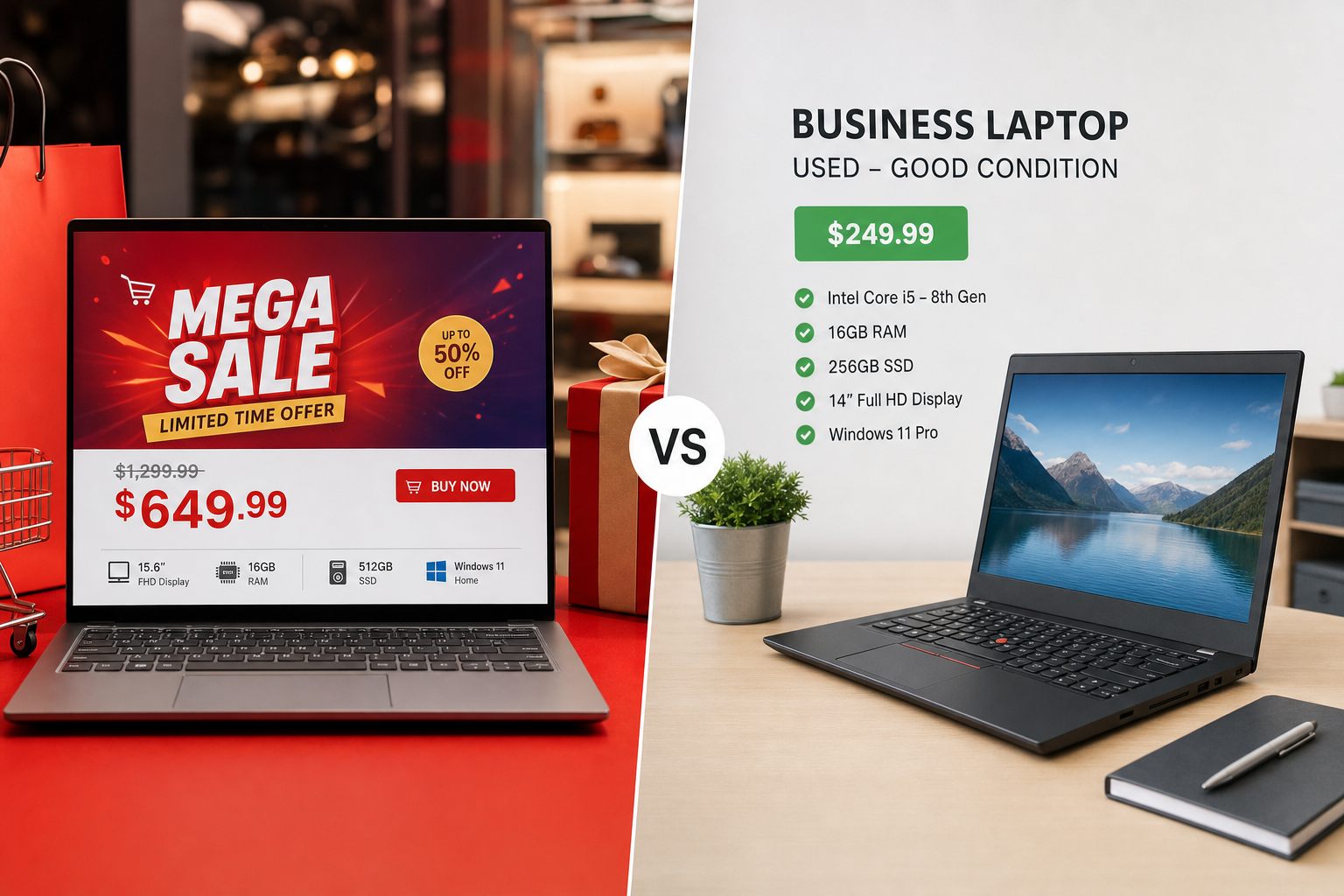
Prime Day Tablet Deals vs Used Tablets: What Should You Buy in 2026?
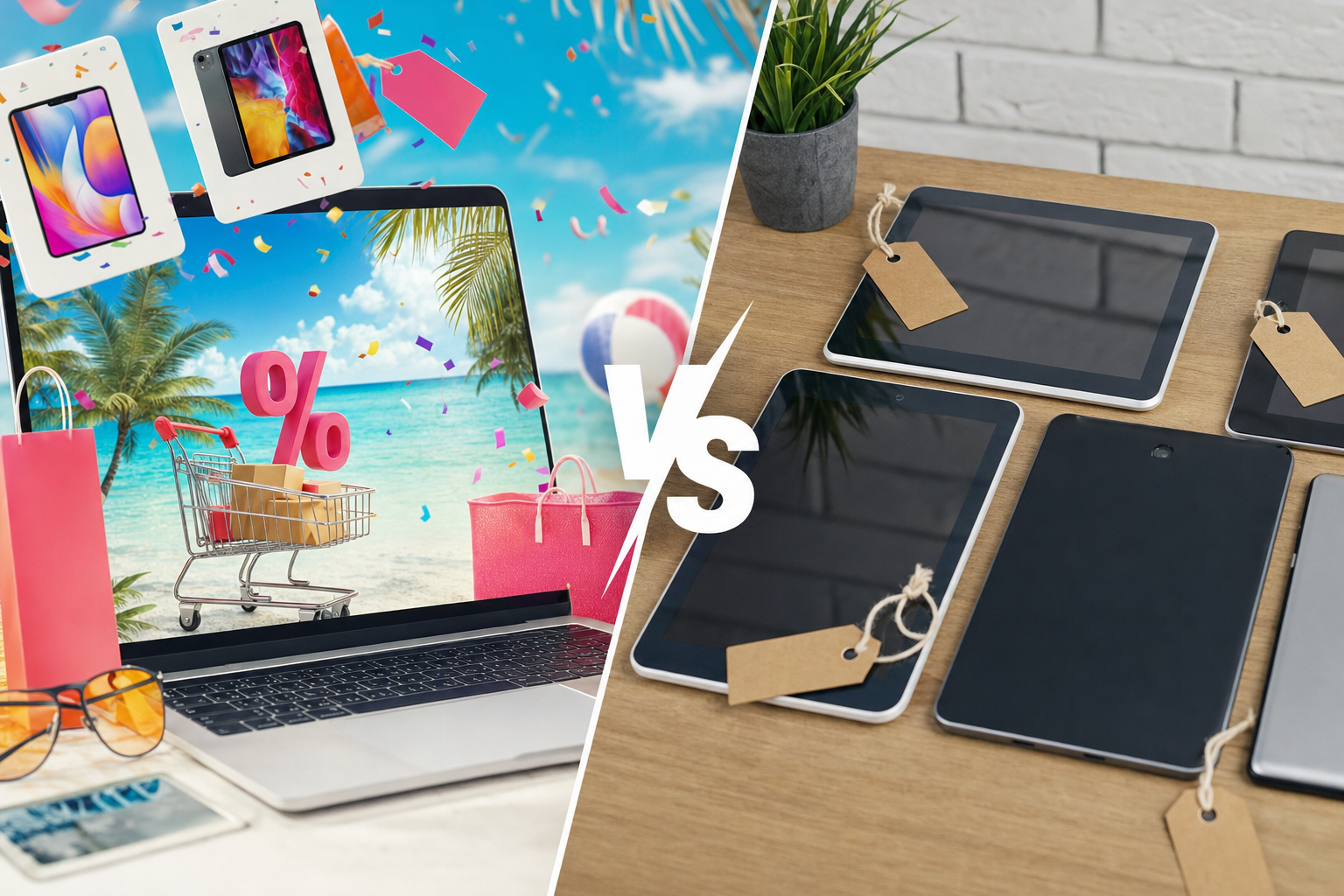
Prime day tablet deals are worth watching, but they are not automatically the best value. In many price bands, a recent-generation used tablet will cost the same as a discounted new budget model while delivering a better screen, faster performance, or more capable software support.
Quick Answer: Buy new during Prime Day if you want a warranty, a fresh battery, and the latest storage baseline; buy used if you want the most tablet for your money, especially in the iPad and Samsung Galaxy Tab FE tiers.
Key Takeaways
- Amazon has set Prime Day 2026 for June 23-26, and its preview says electronics discounts may reach 30%.
- Recent used tablets often land near or below Prime Day sale prices while offering more premium hardware than entry-level new models.
- Storage and battery condition are the two specs that most often decide whether new or pre-owned is the smarter buy.
- Apple and Samsung remain the strongest used-tablet ecosystems because they dominate shipments, accessories, and resale demand.
- SERI’s R2v3 standard supports structured testing and grading practices at certified recycling facilities handling devices for reuse.
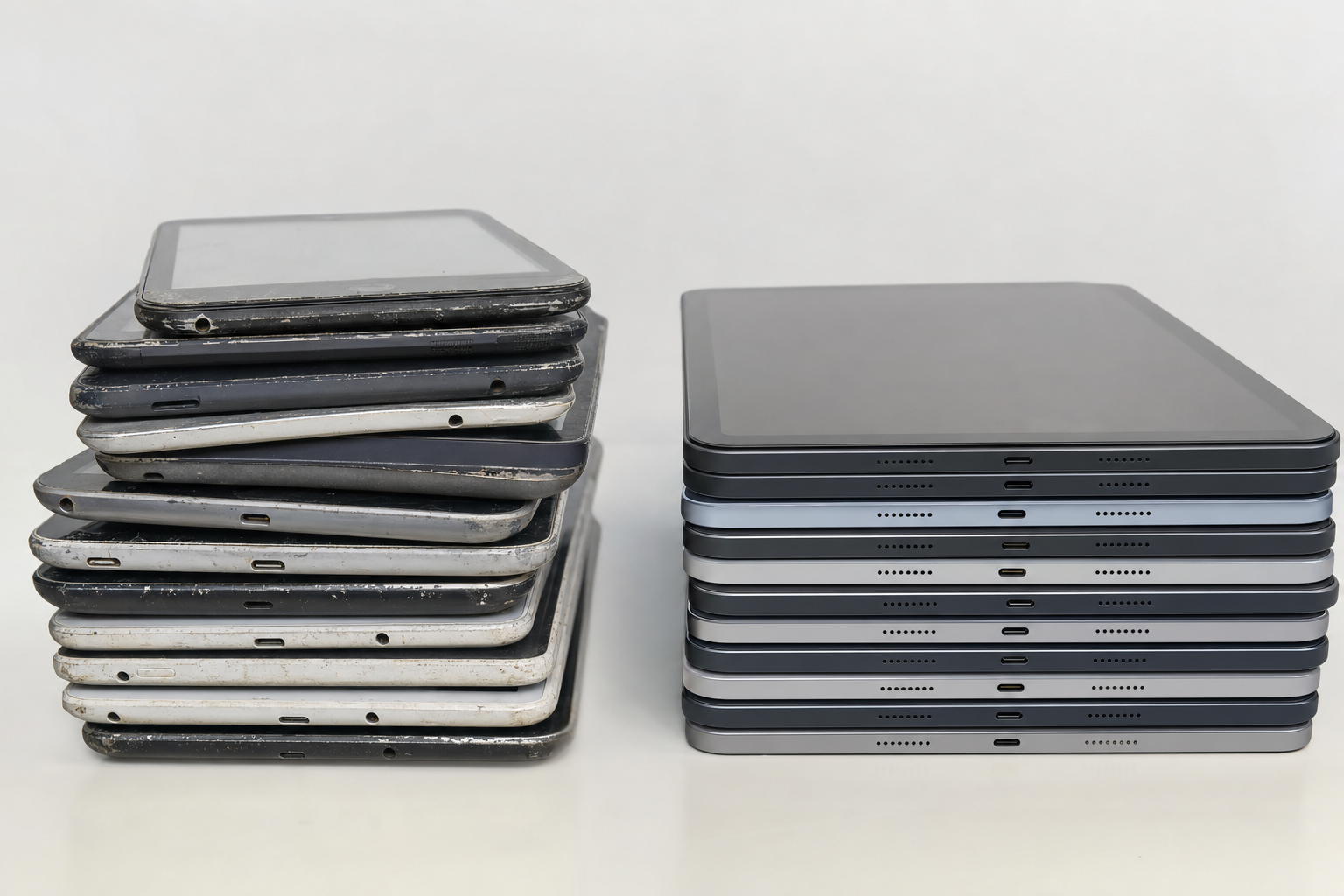
Are prime day tablet deals actually better than buying used?
Sometimes, yes. Amazon has officially scheduled Prime Day 2026 for June 23-26, and its own preview says shoppers should expect up to 30% off electronics, which usually pulls tablets into a few familiar ranges: ultra-budget Fire tablets under $100, mainstream iPads around $250 to $350, and midrange Android tablets around $300 to $450 according to Amazon’s event preview.
The catch is that these discounts often make new entry-level tablets look cheaper than they really are in relative terms. A sale-priced budget tablet may still lose on screen quality, processor class, stylus support, or app longevity when compared with a second-hand iPad or Galaxy Tab from a higher tier.
That is why this comparison matters more than the banner price. If you are shopping Tablets with a fixed budget, the smartest question is not “What is cheapest on Prime Day?” but “What gets me the best mix of screen, storage, battery runway, and everyday usability for this money?”
What price ranges matter most for Prime Day tablet shoppers?
Prime Day tablet shopping is easiest when you break the market into three lanes. The first is budget media tablets, where Fire models usually dominate; the second is mainstream all-purpose tablets, where the base iPad sets the tone; the third is midrange Android, where Samsung and Lenovo fight on display size, speakers, and extras like pen support.
Used-market snapshots from Swappa show why those lanes overlap more than many buyers expect. Recent prices there put the iPad 9th gen around $129, iPad 10th gen around $258, iPad 11th gen around $263, iPad Air 4th gen around $209, Galaxy Tab S9 FE around $190, Galaxy Tab S7 FE around $198, and Fire HD 10 models roughly between $59 and $89 based on current used tablet listings.
Those numbers make Prime Day look less like a one-sided sale event and more like a value check. If a new budget tablet falls to $90, that is compelling; if a more capable used iPad or Samsung lands near $200 to $260, it may be the better long-term buy.
How do new and used tablets compare side by side?
The broad pattern is simple: new wins on certainty, while used often wins on hardware per dollar. The table below captures the comparisons most shoppers will actually face this month.
| Buying Scenario | Typical Prime Day New Option | Typical Used Alternative | What You Gain | What You Give Up | Best For |
|---|---|---|---|---|---|
| Under $100 | Fire HD 10-class budget tablet | Older Fire HD 10 or aging mainstream tablet | Warranty, fresh battery, clean cosmetics | Lower performance ceiling, basic ecosystem | Streaming, reading, kids’ apps |
| $125-$225 | Entry Android tablet or discounted Fire bundle | Used iPad 9th gen or Galaxy Tab S7 FE/S9 FE | Better app support or premium hardware at used tier | Older battery, possible cosmetic wear, lower storage | Schoolwork, browsing, casual productivity |
| $250-$350 | New iPad 11-inch or midrange Android sale | Used iPad 10th gen, iPad Air 4th gen, Tab S9 FE | Higher-end chassis, stronger screens, good accessory ecosystems | No retail unboxing experience, shorter remaining battery life | Everyday tablet buyers, students, note-takers |
| $350-$450 | New midrange Samsung or Lenovo entertainment tablet | Recent premium used tablet with stronger original MSRP | More hardware for the money in many cases | Support window may be shorter than a current model | Media fans, multitaskers, stylus users |
Notice what is missing from that table: a lot of room where cheap new tablets dominate on merit alone. That gap has narrowed because mainstream tablets have become more expensive, while the used market for Apple and Samsung remains active and relatively liquid.
How important are screen size and display quality in this decision?
Very important, because tablets are screen-first devices. A bargain price matters less when the display is dim, cramped, or paired with weak speakers, which is why many shoppers regret buying the cheapest new tablet rather than a more capable older model.
Amazon’s Fire HD 10 remains attractive because it offers a 10.1-inch 1920x1200 display and quoted battery life of up to 13 hours, making it a solid media slab for the right buyer based on Amazon’s device specifications. But a used premium tablet from Apple or Samsung will often feel better in the hand, look sharper in motion, and age more gracefully if you browse a lot, read for long stretches, or keep many apps open.
That tradeoff shows up in other electronics categories too. Buyers comparing a basic office display with a tested older premium panel often reach the same conclusion, which is one reason pre-owned gear across Monitors & Projectors and Laptops & Notebooks can outperform cheap new hardware on daily comfort.

How much storage do you really need in a tablet?
Storage is one of the strongest arguments for buying new this Prime Day. Apple’s 11-inch iPad with A16 now starts at 128GB, a meaningful step up from older entry iPads that often began at 64GB or less per Apple’s published specifications.
That matters if your tablet will hold games, downloaded video, school files, or offline maps. A used iPad 9th gen can still be a terrific value, but older base storage can feel tight fast, especially in households sharing one device among multiple users.
Android and Fire tablets can soften this issue with microSD expansion, which is a real advantage for travelers and families storing movies locally. Buyers who mostly stream and browse can live comfortably with less internal storage than buyers who treat a tablet like a light laptop.
What should you expect from battery life on a used tablet?
Expect some reduction from original battery claims unless the seller discloses especially light prior use. Apple rates the iPad 10th gen for up to 10 hours of web or video use, Amazon quotes up to 13 hours for the Fire HD 10, and Lenovo says its entertainment-focused Tab Plus can reach roughly 12 hours of video playback under its testing conditions.
Those are lab-style figures, not promises, and lithium-ion batteries naturally degrade over time. That is the cleanest reason to buy new if you travel constantly, hand a tablet to kids all day, or hate charging anxiety.
Used tablets still make sense when your routine is lighter. If your device mostly handles evening streaming, recipes, reading, or web browsing, modest battery wear is usually a reasonable trade for saving real money.
Which buyers should choose new Prime Day tablets?
Buy new if you want zero ambiguity. A new tablet makes the most sense for gift buyers, parents who do not want to troubleshoot, travelers who need maximum battery runway, and anyone who plans to keep one device for years without thinking about prior wear.
Prime Day also favors buyers who need a specific current-gen feature set. The base 11-inch iPad’s 128GB starting point is a stronger family purchase than many older used iPads, and shoppers who want a big-screen entertainment tablet with clean cosmetics may prefer a new Lenovo or Samsung deal over a previously deployed alternative.
If you lean new, compare sale prices against historical pricing instead of trusting the crossed-out MSRP. Amazon now shows up to 365 days of price history on many listings, which helps separate a real seasonal drop from a routine markdown during the Prime Day 2026 event.
Which buyers should choose used tablets instead?
Buy used if you care more about capability than shrink-wrap. This is the sweet spot for students, note-takers, households needing a second screen, and shoppers who would rather own an older premium tablet than a new entry-level one.
Samsung’s FE line is the clearest example. New midrange Android tablets often land in the mid-$300s or more, yet used-market pricing around $190 for Tab S9 FE-class hardware gives buyers access to a 10.9-inch tablet, pen support, and a more ambitious overall package than many Prime Day budget models can match.
The same logic applies across the broader second-hand market. In business hardware, a tested off-lease machine like Dell Latitude 5410 14" Laptop i7 10th Gen 256GB SSD 8GB RAM Win 11 Pro (Z3E) B$269.95 Dell Latitude 5410 14" Laptop i7 10th Gen 256GB SSD 8GB RAM Win 11 Pro (Z3E) BView on eBay → shows how older premium gear often converges with new low-end pricing, and tablets follow that pattern closely.
How do grades and seller quality factor into the tablet decision?
Condition language matters because “good deal” and “good fit” are not the same thing. The SERI (Sustainable Electronics Recycling International) R2v3 standard gives structure to testing, grading, and reuse processes at certified facilities, and the EPA recognizes R2 among the major certification standards for electronics recyclers through its certified recycler guidance.
On this site, understanding functional and cosmetic grades helps you decide whether a discount is worth the trade. A unit graded F4 — Hardware Functional (functional) and C4 — Used Good (cosmetic) should be a very different expectation from something with obvious wear, and our Understanding R2V3 Grades page is worth checking before you compare one listing against another.
You can see how that looks outside tablets in listings such as the Google WiFi System Router For Whole Home Coverage NLS-1304-25 FREE S/H$23.99F4C4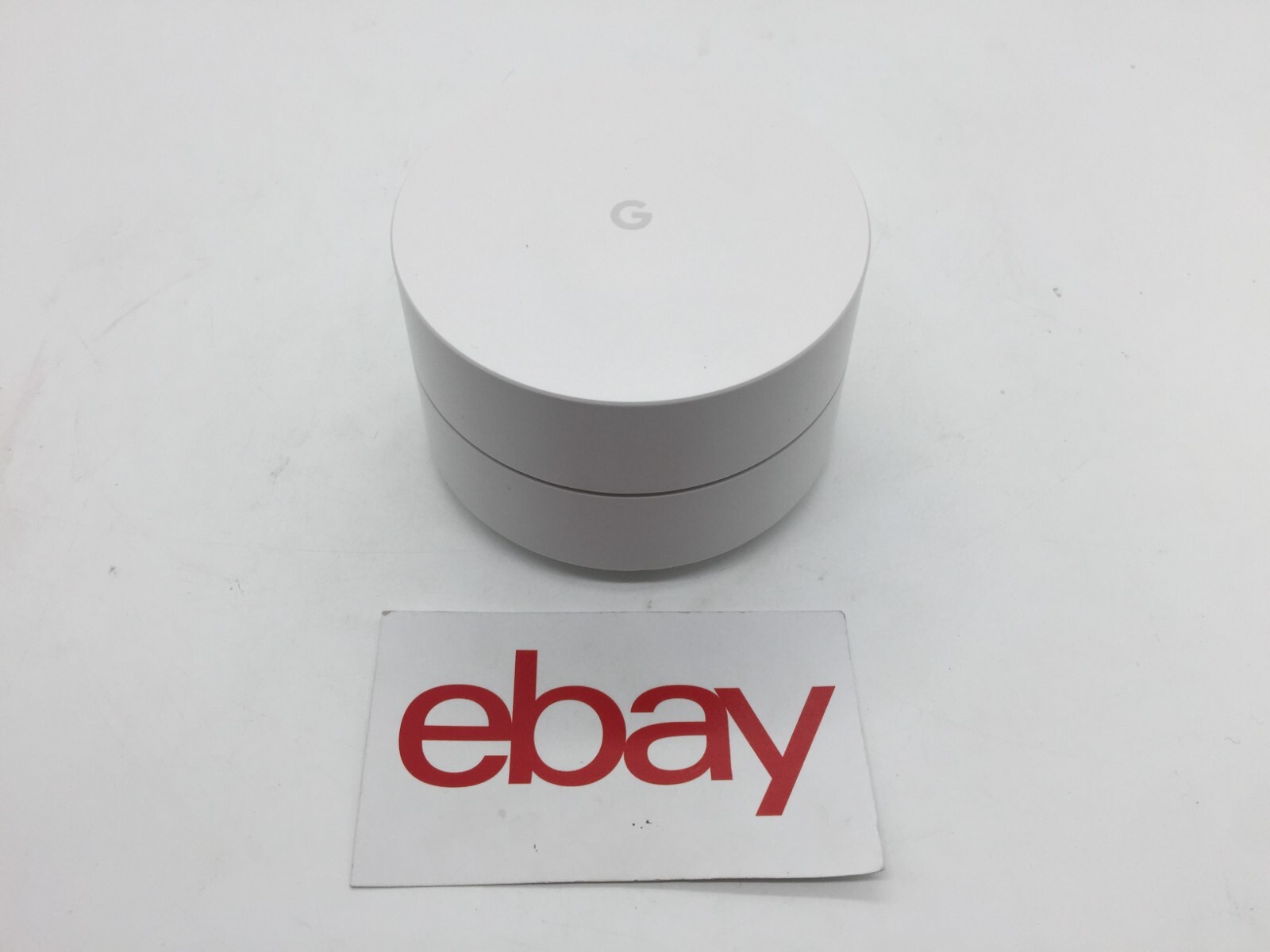 Google WiFi System Router For Whole Home Coverage NLS-1304-25 FREE S/HView on eBay →, which is graded F4/C4, or the HP EliteDisplay E221 21. inch Full HD LED Backlit Monitor - Black$59.99F3C9
 HP EliteDisplay E221 21. inch Full HD LED Backlit Monitor - BlackView on eBay →, which is listed as F3/C9. Different grades answer different buyer priorities: function first, or appearance first.
Is buying used tablets actually better for sustainability?
In many cases, yes, and not just in a symbolic way. The Global E-waste Monitor 2024 reported 62 billion kilograms of e-waste generated in 2022, with only 22.3% formally collected and recycled, a reminder that extending device life still matters materially as summarized by the World Economic Forum.
SERI says the R2 network processed 657,023 metric tons of electronics in 2024, including 166,357 metric tons reused before recycling. That is a useful frame for tablet buyers: reuse is not a niche side activity but a large part of the modern electronics recovery system.
If the environmental angle is part of your purchase decision, read E-Waste Facts 2026: How Much Tech Gets Thrown Away?. It pairs well with the tablet question because this category is exactly where small buying choices can extend product life without sacrificing usability.
So what is the smartest buy before Prime Day 2026?
If you only need streaming, reading, and casual browsing, wait for aggressive Prime Day pricing on a Fire tablet and buy new if the discount is deep enough. If you want a tablet that feels better, lasts longer in daily use, and handles schoolwork or note-taking more gracefully, a recent used iPad or Galaxy Tab FE is often the stronger value.
That split is why the flashiest prime day tablet deals are not always the winners. Budget new beats used premium only when your needs are very light and you place a high premium on warranty coverage; otherwise, the used market often gives you more device for the same money.
For buyers still comparing Apple options specifically, Best Used iPads for Students in 2026: Which Models Still Last is the next logical read. It gets more granular on which generations still make sense in the real world.
Frequently Asked Questions
Are Prime Day tablet deals usually the lowest prices of the year?
Often, but not always. Prime Day tends to bring predictable discounts, especially on Fire tablets, but some “deals” repeat earlier sale prices. Price-history tools are useful because a good Prime Day discount can still be a routine markdown.
Should I buy a new Fire tablet or a used iPad for the same money?
Choose the new Fire tablet if your use is mostly streaming, reading, kids’ apps, and casual web browsing. Choose the used iPad if you want a stronger app ecosystem, better long-term versatility, and a device that feels less limited after the first few weeks.
How much battery life should I expect from a used tablet?
Expect less than original manufacturer claims unless the listing gives unusually strong battery details. For many used tablets, light wear may be barely noticeable in casual home use, but frequent travelers and all-day users are usually better off buying new.
What does an F4 grade mean when buying used electronics?
F4 means Hardware Functional under the SERI R2v3 grading framework. It indicates the item has passed hardware-function testing, though cosmetics are described separately through a C-grade such as C4 or C5.
Are used tablets from R2v3-certified sellers a safe option?
They can be a strong option for buyers who want tested, graded devices from audited facilities. The important step is to read the listing carefully, check the functional and cosmetic grade, confirm accessories, and match the tablet’s age to your expectations for battery and storage.
Is 64GB enough for a tablet in 2026?
It depends on how you use it. For streaming, browsing, reading, and light app use, 64GB can still be fine; for gaming, offline video, schoolwork, or family sharing, 128GB is a much more comfortable baseline.
What is the best kind of buyer for a used tablet instead of a Prime Day sale tablet?
Students, note-takers, budget-conscious families, and anyone who would benefit from a better screen or stronger software support are usually the best candidates. The used route makes the most sense when you value overall capability more than getting a factory-fresh device.
Products Mentioned
Affiliate links — we may earn a commission if you buy through eBay.Google WiFi System Router For Whole Home Coverage NLS-1304-25 FREE S/H
$23.99
HP
HP EliteDisplay E221 21. inch Full HD LED Backlit Monitor - Black
$59.99
Dell
Dell Latitude 5410 14" Laptop i7 10th Gen 256GB SSD 8GB RAM Win 11 Pro (Z3E) B
$269.95
Sponsored
Stay updated on R2V3 deals
Weekly deals from R2V3 certified recyclers in your inbox.