Amazon Prime Day Laptop Deals vs Used Business Laptops: What to Buy in 2026
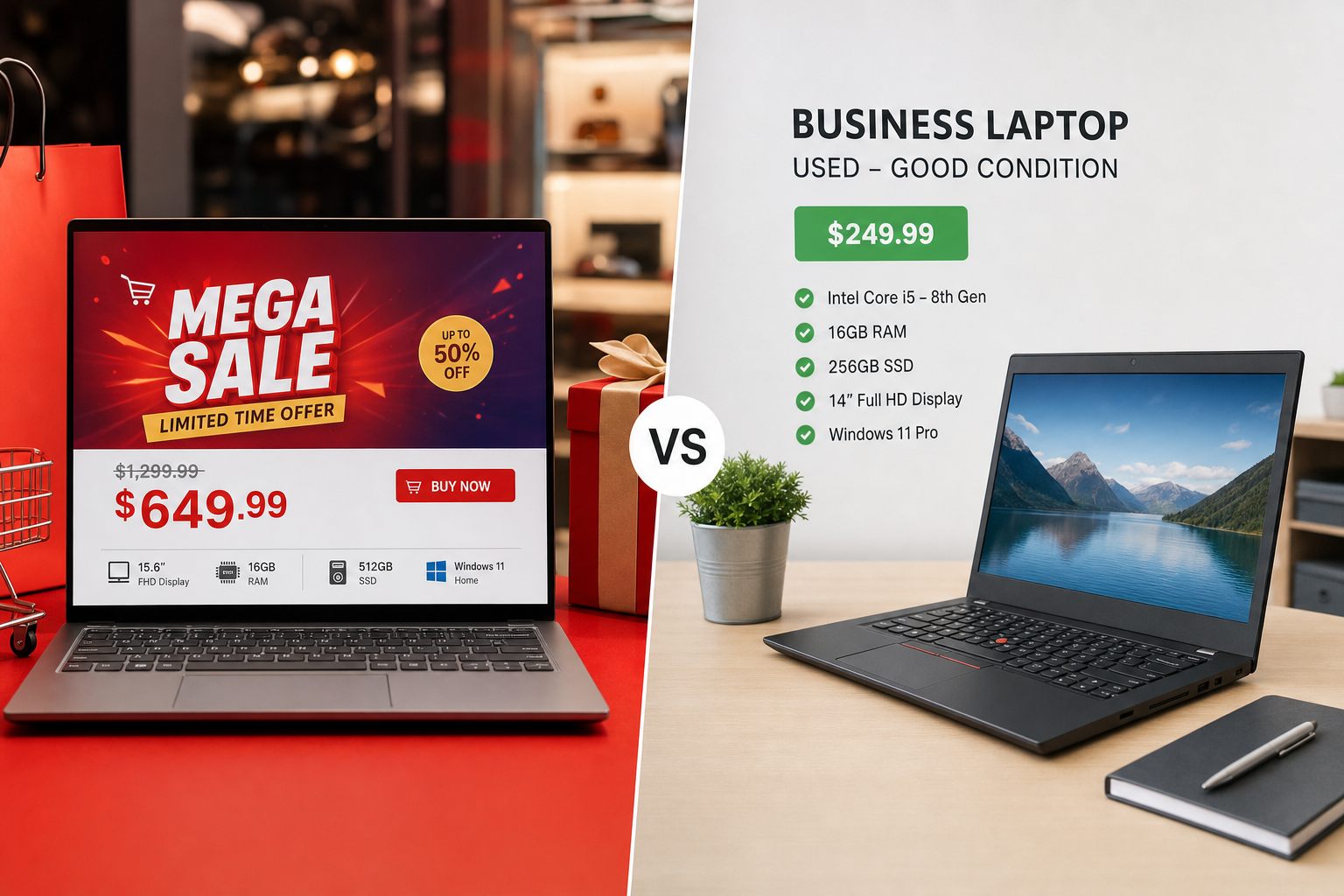
Prime Day laptop deals can be worthwhile, but they are not automatically the best laptop deals for every buyer. In the common $300 to $500 range, a new consumer laptop often trades away ports, chassis quality, and serviceability that a used business machine can still deliver at roughly the same price.
Quick Answer: If your budget is around $300 to $500, a used business laptop often offers better total value than many Prime Day laptop deals, while new models become more compelling when you want the latest battery life, warranty coverage, and zero prior wear.
Key Takeaways
- Amazon says Prime Day 2026 runs June 23 to 26, with electronics discounts advertised at up to 30 percent.
- Budget Prime Day laptops are usually consumer models with modest memory and fewer ports than comparable off-lease business systems.
- Used enterprise laptops from the 2020–2021 cycle often include USB-C or Thunderbolt, HDMI, multiple USB-A ports, and easier service access.
- SERI’s R2v3 standard centers on audited recycling and reuse processes, which aligns well with extending the working life of laptops.
- The best buying choice depends less on “new versus used” than on which tradeoffs matter most to you.
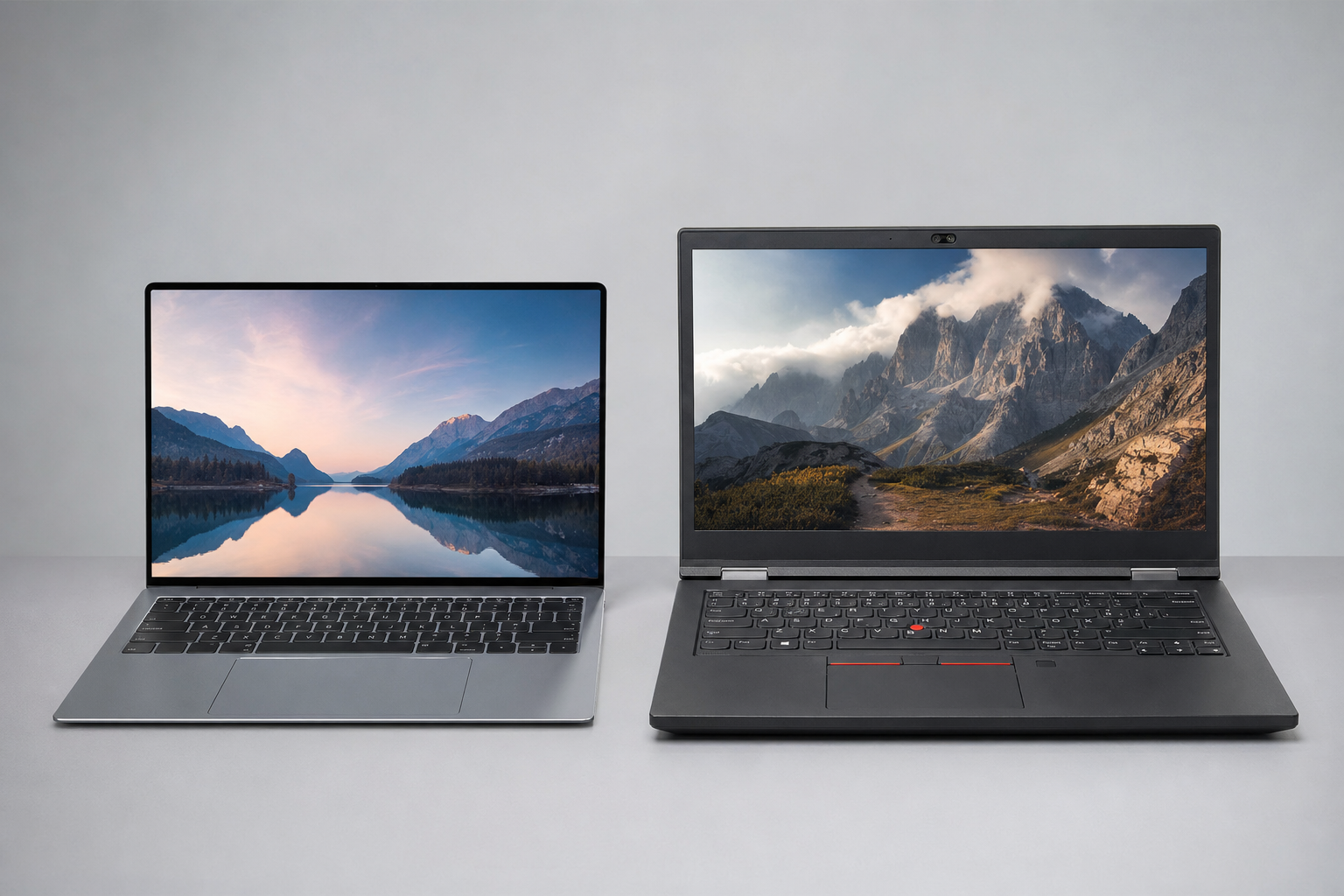
Are Prime Day laptop deals actually the best laptop value?
Not always. Amazon’s own Prime Day 2026 preview frames the event around meaningful electronics discounts, but broad event-wide markdowns do not guarantee that every laptop tier becomes a standout buy.
The most aggressively promoted laptop deals tend to cluster around entry-level consumer machines and mainstream midrange systems. PCWorld’s Prime Day coverage is a useful proxy here: the sub-$500 “good deal” category is often dominated by Inspiron, IdeaPad, and VivoBook-style laptops with 8GB RAM and basic expansion.
That matters because value is not the same thing as sticker price. A low-cost new laptop can look better on the deal page than it feels six months later, especially if you discover you need a dock, more memory, wired Ethernet, or a sturdier keyboard for all-day work.
What are you really getting in the common Prime Day price tiers?
The clearest way to think about prime day laptop deals is by budget band, not by marketing copy. Each tier tends to come with predictable tradeoffs.
| Budget Tier | Typical New Prime Day Laptop | Comparable Used Business Laptop | Best For | Main Tradeoff |
|---|---|---|---|---|
| $300–$450 | Consumer 15-inch Windows laptop, often 8GB RAM, 128GB–512GB SSD, fewer ports | 2020–2021 business 14-inch laptop, often 8GB–16GB RAM, 256GB–512GB SSD, better ports | Students, home office, general productivity | New gets freshness; used often gets stronger build and connectivity |
| $500–$800 | Mainstream Ryzen 5 or Core i5 laptop with improved storage and display options | Higher-spec enterprise notebook with better keyboard, docking, and easier service | Hybrid work, multitasking, office-heavy use | New may win on battery efficiency; used often wins on hardware quality per dollar |
| $900+ | Premium ultraportable, creator laptop, or gaming system | Well-equipped premium business laptop at a much lower price | Buyers choosing between luxury and practicality | New brings latest platform gains; used rarely matches prestige features like OLED or dedicated GPUs |
In the lowest tier, the comparison is especially sharp. Reports from recent deal coverage suggest that around $350 to $450 often buys a new consumer laptop with current-enough silicon but obvious compromises in materials, keyboard feel, and port selection.
That is where the used side becomes interesting. Swappa’s 2026 guidance on used laptop buying specifically points to ThinkPads, Latitudes, and similar business lines as attractive resale buys because they were designed for longer service lives and then depreciate hard after lease cycles.
Why do used business laptops compare so well at $300 to $500?
The sweet spot trails the retail market by about three to five years. A 2020 or 2021 enterprise laptop is old enough to have dropped into budget territory, but new enough to still offer USB-C, NVMe storage, Windows 11 compatibility on many configurations, Wi-Fi 6-era networking, and 1080p-class screens.
That timing is why the comparison is not really “old junk versus new tech.” It is more like “last cycle’s workhorse versus this cycle’s budget special,” and those are very different products even when the prices overlap.
A current listing such as this Dell Latitude 5410 14" Laptop i7 10th Gen 256GB SSD 8GB RAM Win 11 Pro (Z3E) B$269.95 Dell Latitude 5410 14" Laptop i7 10th Gen 256GB SSD 8GB RAM Win 11 Pro (Z3E) BView on eBay → at $269.95 shows how quickly business hardware can enter practical-budget territory. Even though it is one generation older than the Latitude 5420 often used in market comparisons, it illustrates the same point: enterprise notebooks can land near entry-level Prime Day pricing while still bringing a more serious chassis and work-focused feature set.
How do ports and docking support change the buying decision?
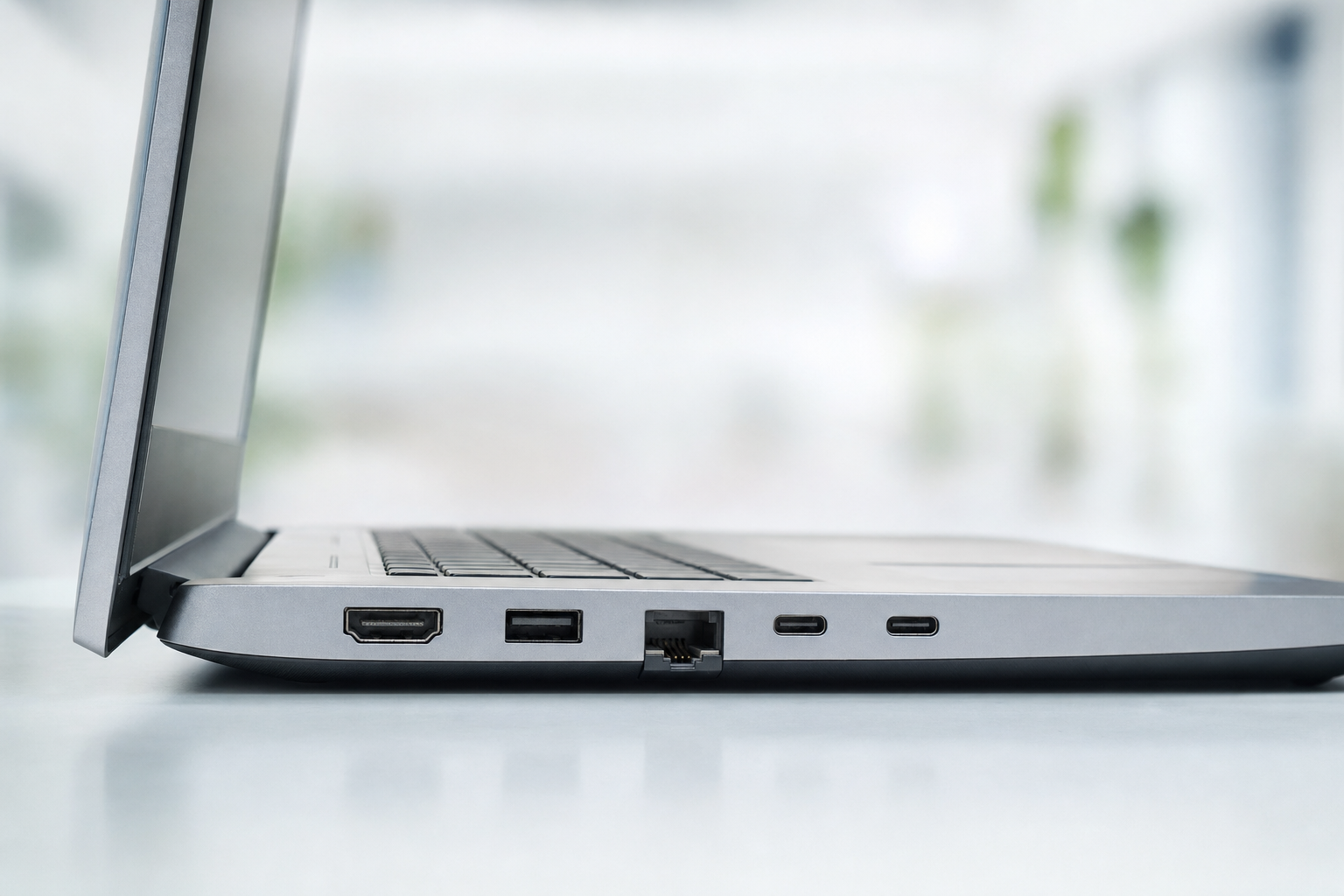
Ports are where many Prime Day laptop deals stop looking like deals. Consumer machines often trim away RJ45 Ethernet, reduce USB-A count, or include USB-C without the higher-end docking and display flexibility that office users actually need.
The Dell Latitude 5420 is a good example of what business design still looks like. Dell’s official documentation lists two Thunderbolt 4 ports, two USB-A ports, HDMI 2.0, microSD, and RJ45 Ethernet, while Notebookcheck’s review praised its expandability and maintenance access despite noting a weaker clickpad than the rest of the package in Dell’s own specs and Notebookcheck’s testing.
That is not a niche advantage. Wired networking still matters in plenty of home offices, campus labs, and hotel conference rooms, and a laptop that connects to displays and accessories without a bag full of adapters tends to age more gracefully.
Do build quality and keyboards still matter more than specs?
For many buyers, yes. The frustrating truth about cheap laptop shopping is that spec sheets are easy to compare, while hinge stiffness, keyboard feel, palm-rest flex, and long-session comfort are hard to see until after checkout.
Business laptops have traditionally earned their reputation in exactly those less glamorous areas. Lenovo’s ThinkPad T14 Gen 1, for example, remains attractive because of its keyboard, conservative design, docking support, and corporate durability focus, with Lenovo’s spec materials showing the expected enterprise security and USB-C docking options in Lenovo’s PSREF documentation.
There is useful nuance here. Notebookcheck found that the Intel ThinkPad T14 Gen 1 can run hot, which is why many buyers prefer AMD Ryzen Pro versions when prices are close; a live example is this Lenovo ThinkPad Thunderbolt 3 Dock Only Type 40AC DBB9003L1 No Power Adapter$19.99 Lenovo ThinkPad Thunderbolt 3 Dock Only Type 40AC DBB9003L1 No Power AdapterView on eBay →, which is not a laptop itself but neatly underscores one advantage of the ThinkPad ecosystem: docking hardware stays plentiful and cheap long after a model leaves the corporate fleet. If you want a deeper look at that angle, see Best Used Docking Stations for Home Office Setups in 2026.
What about upgradeability and long-term ownership value?
This is where many used enterprise laptops quietly pull ahead. Notebookcheck’s Latitude 5420 review and HP EliteBook 840 G8 coverage both emphasize service access and upgrade-friendly design, which matters because a replaceable SSD, available battery, or common dock can extend useful life without turning the laptop into a project.
That is a more practical advantage than raw benchmark bragging rights. Plenty of shoppers never need the newest processor, but they absolutely notice when a machine cannot adapt to a second monitor, a failing battery, or a storage upgrade.
Accessories also shape the ownership cost. A budget home setup might pair a laptop with an inexpensive external display like this HP EliteDisplay E221 21. inch Full HD LED Backlit Monitor - Black$59.99F3C9 HP EliteDisplay E221 21. inch Full HD LED Backlit Monitor - BlackView on eBay →, and enterprise laptops are often better prepared for that kind of desk life because they were designed around docking, conference rooms, and multi-display work from the start.
When is a new Prime Day laptop the smarter buy?
A new machine still makes perfect sense for plenty of people. If you care most about full manufacturer warranty coverage, the latest battery efficiency, lighter weight, quieter cooling, or simply knowing every component has had zero prior use, Prime Day can be a rational time to buy.
The strongest case for new also appears as you climb the ladder. Once you move into the $600-and-up range, the gap in CPU efficiency, integrated graphics, webcam quality, and battery life can become large enough that the used-business-laptop argument loses some force.
There is also a market-timing angle. Tom’s Hardware has reported on upward price pressure tied to memory, storage, and AI-era component dynamics, so a legitimately discounted new laptop is still worth considering if you were planning to buy current-generation hardware anyway.
What should you buy in each budget range?
If your budget tops out around $350, a used business laptop is usually the more interesting option. In that range, Prime Day often serves up entry-level new systems with 8GB RAM and minimal expansion, while the secondary market may deliver a sturdier off-lease notebook with better ports and business-focused design.
Between $350 and $500, the decision is closest. This is the zone where many prime day laptop deals look attractive on paper, but it is also the zone where a previously deployed enterprise model can match or beat them on keyboard quality, chassis strength, docking, and serviceability.
Above $700, you should be more selective about going used unless those business-class strengths are exactly what you want. Buyers shopping Laptops & Notebooks for travel, long battery life, and modern efficiency may prefer new, while those building out a desk setup with Monitors & Projectors, adapters, and wired networking may get better total value from business hardware and supporting gear in Networking Equipment or Computer Components & Parts.
How does the sustainability angle fit into the decision?
Used laptops are not just a budget story. The Global E-waste Monitor 2024 describes a world where e-waste is growing faster than documented recycling capacity, which makes continued reuse of working equipment more valuable than ever.
SERI, the organization behind the R2 standard, describes R2v3 as a framework intended to maximize value across the electronics life cycle through responsible reuse and recovery. EPA also recognizes R2 and e-Stewards as accredited recycler certification standards in the U.S., as shown on its certified electronics recyclers guidance. If you want the broader context, How R2V3-Certified Recyclers Support the Circular Economy for Electronics is the right follow-on read.
For buyers, the practical takeaway is simple: stretching the life of a capable laptop can improve value and support a more circular outcome at the same time. That is especially compelling when the machine still meets modern needs without forcing you into a pile of compromises.
Frequently Asked Questions
Are Prime Day laptop deals usually cheaper than used laptops?
Not across the board. Prime Day often lowers the price of new entry-level consumer laptops, but a used business laptop in the same budget can offer better ports, stronger construction, and more upgrade headroom.
What is the best choice around $400?
At roughly $400, the used business-laptop route is often stronger if you value keyboard quality, connectivity, and durability. A new deal makes more sense if you care more about full warranty coverage and having a machine with no prior wear.
Which matters more for value: CPU generation or build quality?
For web work, office apps, remote learning, and general productivity, build quality often has more effect on daily satisfaction than a small CPU-generation jump. Better hinges, ports, thermals, and serviceability tend to age well.
Why do business laptops often have more ports than consumer laptops?
Business models were designed for conference rooms, docks, wired networks, and multi-display desks. That usually means more USB-A, HDMI, USB-C or Thunderbolt, and sometimes Ethernet, while consumer laptops often prioritize thinness and lower cost.
Should I buy a used ThinkPad, Latitude, or EliteBook instead of a Prime Day Inspiron or IdeaPad?
If your priority is long-term ownership value, that comparison often favors the business model. If your priority is brand-new condition, latest-generation efficiency, and retail warranty simplicity, the new consumer laptop can still be the better fit.
What do R2v3 grades mean when shopping for used electronics?
The grade system separates function from cosmetics. For example, F4 — Hardware Functional indicates working hardware, while a cosmetic grade such as C4 — Used Good describes visible wear. You can review the full scale on Understanding R2V3 Grades.
Is buying used actually better for the environment?
Keeping a working laptop in service generally supports a more circular electronics economy by delaying replacement and reducing pressure on recycling systems. That does not make every used purchase perfect, but reuse is usually a higher-value outcome than premature disposal.
Products Mentioned
Affiliate links — we may earn a commission if you buy through eBay.Lenovo
Lenovo ThinkPad Thunderbolt 3 Dock Only Type 40AC DBB9003L1 No Power Adapter
$19.99
HP
HP EliteDisplay E221 21. inch Full HD LED Backlit Monitor - Black
$59.99
Dell
Dell Latitude 5410 14" Laptop i7 10th Gen 256GB SSD 8GB RAM Win 11 Pro (Z3E) B
$269.95
Sponsored
Stay updated on R2V3 deals
Weekly deals from R2V3 certified recyclers in your inbox.