
How R2V3-Certified Recyclers Support the Circular Economy for Electronics

Circular economy electronics depends on one simple outcome: keeping devices and components in use at their highest practical value for as long as possible. R2V3-certified recyclers support that goal by sorting, testing, grading, reselling, harvesting usable parts, and managing end-of-life material flows under audited processes defined by SERI (Sustainable Electronics Recycling International).
Quick Answer: R2V3-certified recycling facilities strengthen the circular economy for electronics by extending product life through verified reuse pathways, standardized grading, parts recovery, secure handling, and more controlled downstream processing when reuse is no longer possible.
Key Takeaways
- R2V3-certified recyclers help keep electronics in circulation through reuse, repair, component recovery, and documented processing practices.
- Functional grades such as F3, F4, F5, and F6 describe how well an item works, while cosmetic grades such as C3 and C4 describe visible wear.
- Grade codes make the used electronics market easier to read because performance and appearance are separated instead of blurred together.
- Responsible circularity includes downstream control for devices that cannot be resold, not just the resale of working gear.
- Post-Earth Day buying interest often shifts from general recycling advice to practical questions about how to identify better used electronics sources.

What does circular economy electronics actually mean?
In electronics, a circular economy is less about slogans and more about decision-making. A laptop that can be cleaned, tested, and resold should not be shredded for commodities, and a device with one failed subsystem may still have a battery, screen, keyboard, board, or enclosure worth recovering.
That hierarchy matters because the highest-value outcome is usually continued use. Material recycling still has a role, but once a working system is reduced to raw fractions, the labor, manufacturing energy, and embedded components that made it valuable are gone.
Post-Earth Day interest tends to move quickly from broad e-waste concern to a more practical question: which sellers are actually set up to keep electronics in circulation responsibly? That is where audited facilities and standardized processes start to matter more than green messaging.
How do R2V3-certified recyclers keep electronics in use longer?
R2V3 is the current version of the R2 standard, developed by SERI for electronics reuse and recycling operations. The standard covers operational controls that affect whether equipment is suitable for resale, whether components can be harvested safely, and how non-reusable material is handled through downstream vendors; the official framework is outlined on the R2 Standard overview.
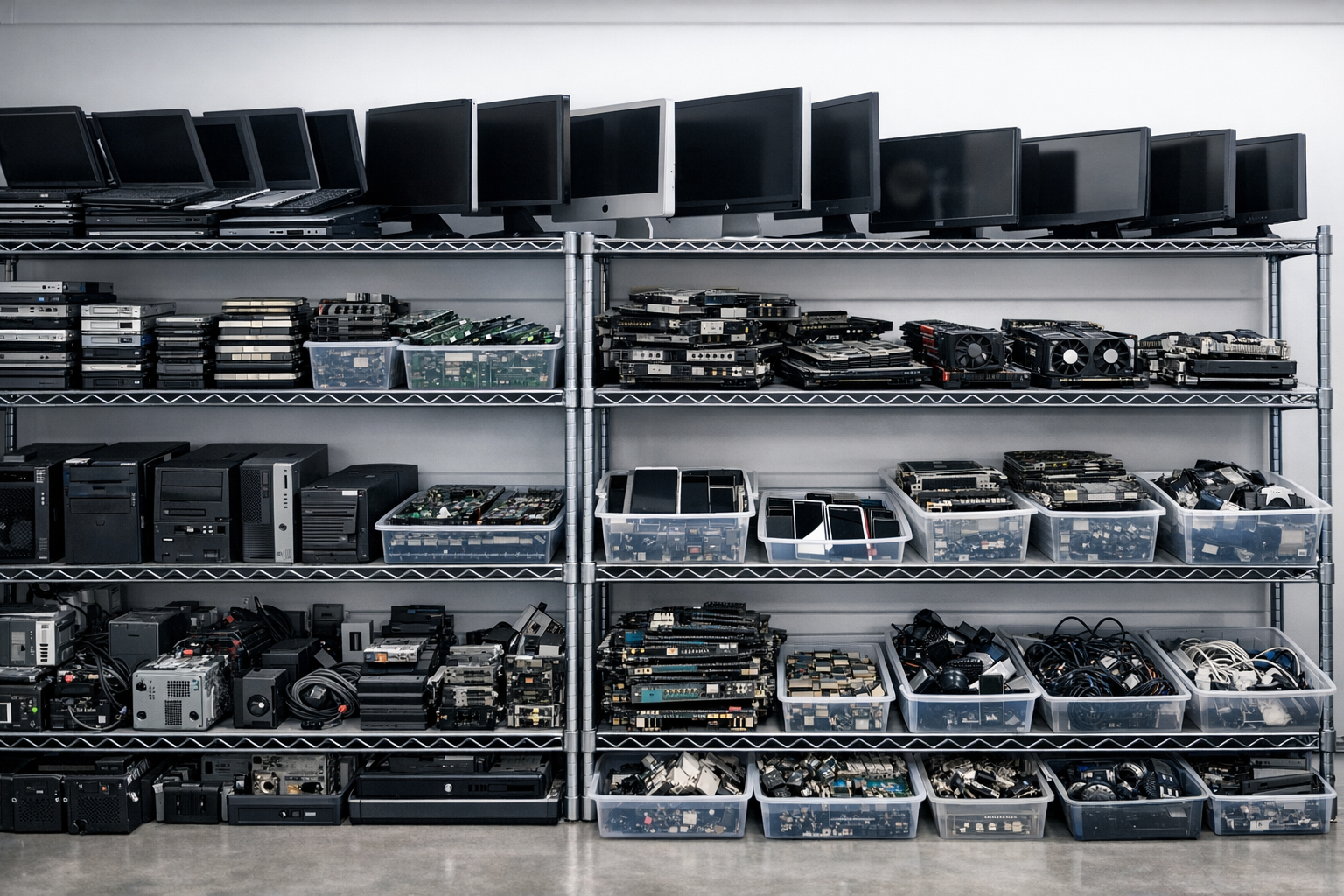
In practice, that means incoming equipment is triaged instead of treated as a single waste stream. Some units are ready for direct resale after testing, some need parts matching or accessory replacement, some are better suited for component harvesting, and some should move to final processing because reuse no longer makes sense.
The difference shows up clearly in enterprise accessories and peripherals, which often have years of useful life left after decommissioning. A Lenovo ThinkPad Thunderbolt 3 Dock Only Type 40AC DBB9003L1 No Power Adapter$19.99 Lenovo ThinkPad Thunderbolt 3 Dock Only Type 40AC DBB9003L1 No Power AdapterView on eBay → is a good example: off-lease docks are easy to overlook, but they keep older workstation setups useful long after the original laptop fleet changes.
Why does standardized grading matter when buying used electronics?
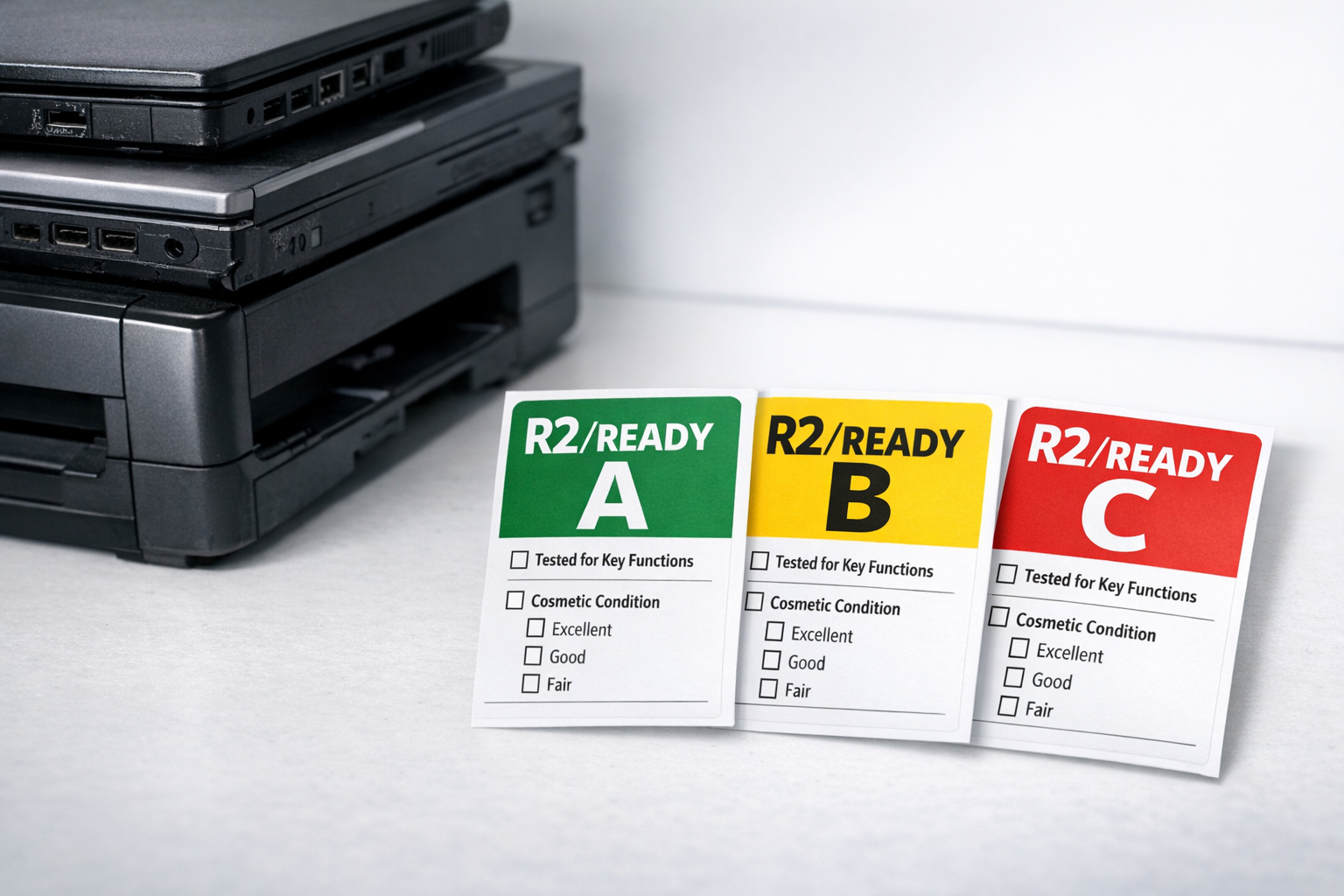
One of the biggest frictions in the second-hand market is vague condition language. “Works great” can mean almost anything, which is why R2V3 grade codes are useful: functional and cosmetic condition are separated, so buyers can evaluate performance and appearance on different tracks.
Functional grades use the F scale, from F1 — Collectible or Specialty Equipment (functional) through F6 — Like New (functional). Cosmetic grades use the C scale, from C1 — Damaged (cosmetic) through C9 — New Open Box (cosmetic).
That split helps buyers make smarter tradeoffs. A device with moderate wear can still be the right buy if its hardware testing is strong, while a cleaner-looking unit may not be the better value if the functional grade is lower.
What do F and C grades mean in real-world shopping?
F3 — Key Functions Working (functional) means the item has passed testing for its primary functions, though it may not be fully verified across every feature or may be incomplete in some way. F4 — Hardware Functional (functional) indicates hardware functionality with a higher level of confidence for standard operation, while F5 — Refurbished (functional) is reserved for repaired, restored, or remanufactured equipment, and F6 — Like New (functional) sits at the top end of the scale.
Cosmetic grades answer a different question. C3 — Used Fair (cosmetic) suggests plainly visible wear, while C4 — Used Good (cosmetic) usually means ordinary signs of previous use without heavy damage.
You can see how that plays out in practical buying decisions. The HP LaserJet P2015 Standard Monochrome Laser Printer 10.8k Pages$69.99F4C4 HP LaserJet P2015 Standard Monochrome Laser Printer 10.8k PagesView on eBay → is listed at F4/C4, which tells you something useful immediately: this is a tested workhorse printer with normal cosmetic wear, exactly the sort of previously deployed office gear that often outlasts cheaper new hardware.
How do repair and parts recovery fit into the circular economy?
Not every device should be resold whole, and that is part of the point. Circularity in electronics works best when facilities can recover assemblies and components that solve another device’s problem faster than manufacturing a replacement from scratch.
Laptop parts show this especially well because modern machines often fail at the edges first: a cracked palmrest, worn keyboard, failed battery, or damaged top case can sideline an otherwise capable system. A listing like the Apple MacBook Pro A2141 16" Top Case, Touch Bar, Battery 661-13161 GRADE B$24.99F4C3 Apple MacBook Pro A2141 16" Top Case, Touch Bar, Battery 661-13161 GRADE BView on eBay → illustrates the mechanics of a circular market nicely, since one salvaged assembly can return a far more expensive notebook to service instead of sending the whole machine into premature retirement.
That parts ecosystem matters for buyers browsing Computer Components & Parts, IT teams maintaining aging fleets, and collectors trying to preserve specific models. It also overlaps with policy trends discussed in this simple guide to the R2V3 standard, where reuse and process controls are inseparable from each other.
What happens when equipment cannot be reused?
A circular economy is not only about finding another buyer. Some gear is too damaged, too incomplete, or too obsolete to return to service, and responsible handling then depends on where materials go next and how those downstream partners are managed.
That is one reason audited process standards matter. The EPA’s electronics donation and recycling guidance and work by the Basel Action Network both reflect a long-running concern in this sector: poor controls can push unusable electronics into opaque channels instead of legitimate recovery streams.
Data-bearing devices add another layer. Storage media sanitization is its own discipline, and NIST SP 800-88 remains a key reference point for media sanitization practices that matter to businesses, institutions, and anyone buying previously deployed equipment.
Why does this matter to buyers after Earth Day?
Earth Day coverage usually succeeds at getting people to care, but buyers still need a practical filter once they start comparing listings. The question is no longer whether electronics waste is a problem; it is how to spot a seller whose inventory passes through documented testing, grading, and handling systems.
That applies whether you are shopping for Laptops & Notebooks, browsing Networking Equipment, or sourcing older devices for a back office, lab, classroom, or repair project. A standard grade code and an audited seller tell you more than a generic “open box” or “estate find” label ever will.
For buyers scanning the wider market, a platform-level filter also changes the experience. You can Browse All Products, compare categories such as Printers & Scanners and Smart Home & Surveillance, or dig deeper into Understanding R2V3 Grades without having to decode every seller from scratch.
How does that support a stronger reuse market overall?
Better reuse markets are built on trust, and trust usually comes from clarity. Buyers need a cleaner read on function, condition, and handling, while IT asset managers need evidence that retired gear moved through a process with stronger controls than an anonymous liquidation chain.
That is why the circular economy for electronics is not just about selling more used gear. It is about preserving function where possible, recovering parts where practical, documenting condition in a standardized way, and processing the remainder through more accountable channels.
Seen that way, even a mixed inventory starts to make sense as one connected system. A tested laptop, a previously deployed printer, a harvested MacBook assembly, and a decommissioned dock all represent different points on the same circular path rather than separate markets.
Frequently Asked Questions
What does circular economy electronics mean for an ordinary buyer?
It means buying electronics in a way that keeps products and components in use longer instead of pushing everything toward disposal. In practical terms, that includes choosing tested used equipment, replacement parts, and accessories that extend the life of devices you already own.
What does R2V3 certification mean?
R2V3 refers to the current version of the R2 standard maintained by SERI for electronics reuse and recycling operations. It signals that the seller’s facility operates under audited requirements covering areas such as testing processes, data handling, and downstream management.
What is the difference between F3 and F4 grades?
F3 means key functions are working, while F4 means the hardware is functional at a stronger level of standard operational readiness. Both can be good buys, but F4 generally gives buyers more confidence for everyday deployment.
How should I use cosmetic grades like C3 and C4?
Use cosmetic grades to judge visible wear, not performance. A C3 unit may show more noticeable marks than a C4 unit, but either can still be a sound purchase if the functional grade and listing details match your needs.
Is buying from an R2V3-certified recycler better than buying from any random marketplace seller?
For many buyers, yes, because the listing comes from a seller operating at an audited recycling facility with documented handling practices. That does not guarantee a perfect fit for every purchase, but it does add a layer of process transparency that the broader used market often lacks.
Are replacement parts part of the circular economy too?
Absolutely. Recovered assemblies, keyboards, housings, docks, adapters, and other parts often keep a repairable device in service at far lower cost and environmental impact than replacing the whole machine.
Where can I compare grades and product categories more easily?
You can review What Is R2V3 Certification?, check the Certified Recycler Directory, or explore categories such as Servers & Enterprise and TV & Video to compare inventory with clearer condition signals.
Products Mentioned
Affiliate links — we may earn a commission if you buy through eBay.Sponsored
Stay updated on R2V3 deals
Weekly deals from R2V3 certified recyclers in your inbox.